
Classroom Management and PBL Blog for Grades 6-12 Teachers
-
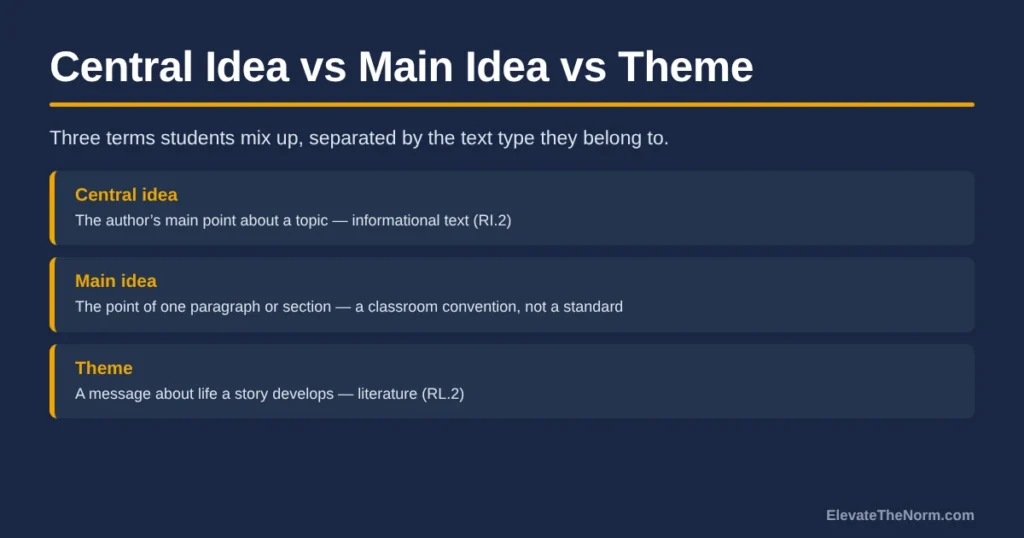
Central Idea vs Main Idea vs Theme: What Each Means and How Students Find It
Central idea is the author’s main point in informational text; theme is the message a story develops. A six-step routine, the four distractor types, and a practice passage with an answer key.
-
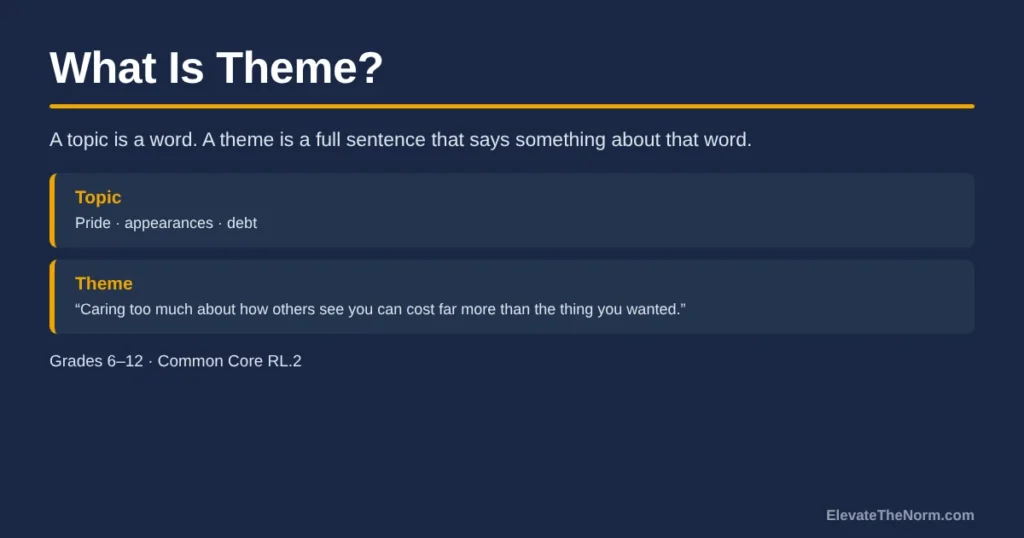
What Is Theme? A Definition Students Can Use, and How to Teach It in Grades 6–12
Theme is a full sentence about life that a story develops, not a one-word topic. A five-step routine, sentence frames, three worked public-domain texts, and the six mistakes students make in grades 6-12.
-
Hinge Questions: How to Check Understanding Mid-Lesson Without Fooling Yourself
A hinge question is one mid-lesson check built so wrong answers name the misconception. The design rules, the limits of a single item, and why the formative-assessment effect size everyone quotes is called an urban legend.
-
Gradual Release of Responsibility: What the Model Actually Says, and Where Teachers Get It Wrong
The gradual release of responsibility came from a 1983 reading-comprehension review, not a lesson-plan template. Here is what the model claims, how thin the evidence is, and the fading research that answers when to let go.
-
Mnemonic Devices in Grades 6–12: What They Actually Help Students Remember
Mnemonic devices are memory tricks that attach hard-to-recall information to something easy to picture or say. They work for ordered lists, terms and vocabulary. They do not build understanding, and the benefit fades fast without retrieval behind it.

