
Classroom Management and PBL Blog for Grades 6-12 Teachers
-
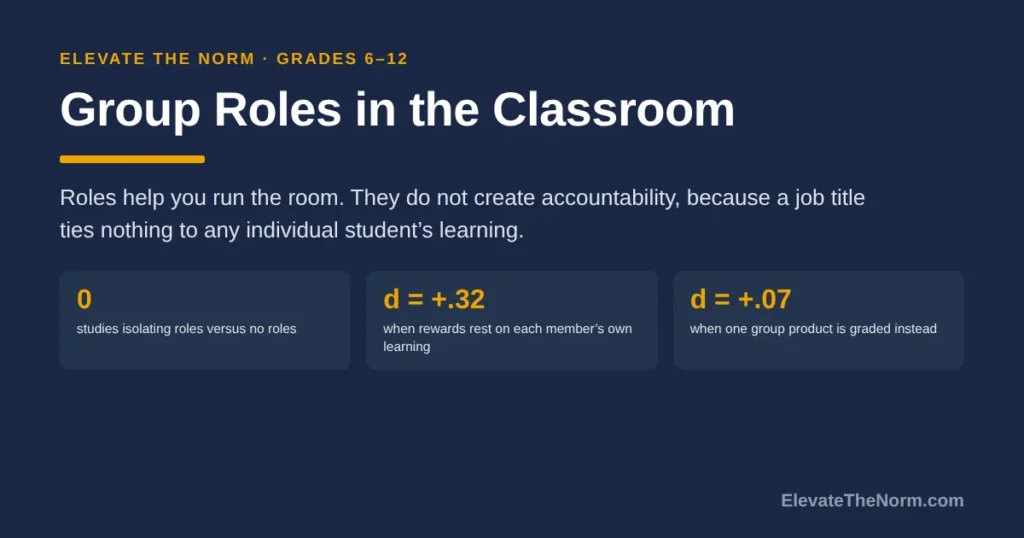
Group Roles in the Classroom: What They Fix, What They Don’t, and What to Use Instead
No study has isolated assigned group roles and measured what students learn. Here is what the research on structured collaboration actually shows, why role cards do not fix the student who does nothing, and what does.
-
Spiral Review in Grades 6–12: How to Build One, and Where the Evidence Stops
Spiral review means deliberately revisiting material you already taught, spread across weeks rather than crammed before a test. The spacing research behind it is strong. The research on spiral review itself, as a packaged routine in grades 6-12, barely exists.
-
Pre-Assessment in Grades 6–12: What the Evidence Shows, and When It’s Worth the Time
A pre-assessment is a short check given before you teach a unit, to find out what students already know. The research behind it is thin and mostly from college classrooms, so it earns its place only when you cannot already predict the result and you will act on what it tells you.
-
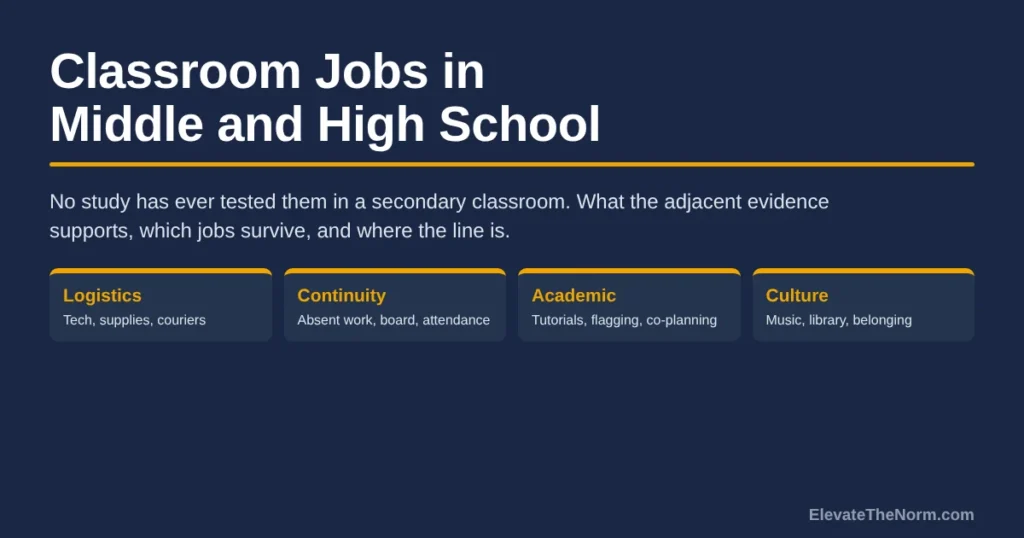
Classroom Jobs for Middle and High School: What Works When Students Are Too Old for a Job Chart
Classroom jobs are recurring duties students hold all term — tech, attendance, absent work, supplies, the board. In middle and high school they work as a way to hand over real operational responsibility, not as a behavior reward. No study has tested them in a secondary classroom, so run them for the responsibility, and judge…
-
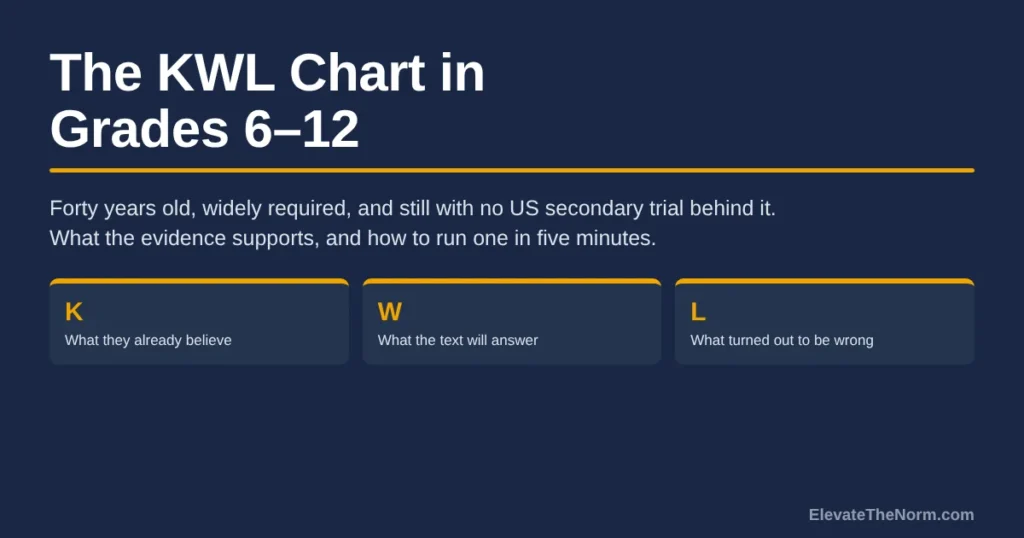
KWL Chart: How to Use It in Grades 6–12, and What the Evidence Actually Shows
A KWL chart is a three-column chart — Know, Want to know, Learned — that students fill in before and after reading. In grades 6–12 it earns its place as a diagnostic, not a comprehension treatment: no US secondary trial of it exists, and the federal practice brief for grades 4–12 recommends activating prior knowledge…

