
Classroom Management and PBL Blog for Grades 6-12 Teachers
-
The Frayer Model: When Four Boxes Beat a Definition List
The Frayer Model surrounds one concept with a definition, characteristics, examples and non-examples. Here is what the four boxes do, which words deserve one, how to run it in a grades 6-12 content class, and what the evidence will and will not carry.
-
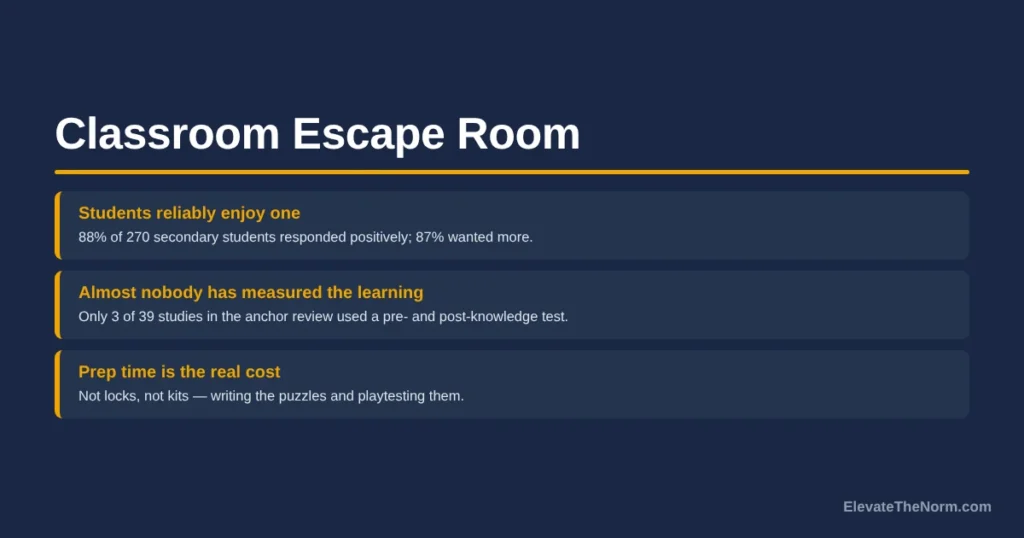
Classroom Escape Room: How to Build One for Grades 6–12 Without Losing a Week
A classroom escape room is a timed puzzle sequence students unlock by solving content problems. Students reliably enjoy one; the measured learning evidence is thin. Here is what the research shows, what the build actually costs, and how to run one in 50 minutes.
-
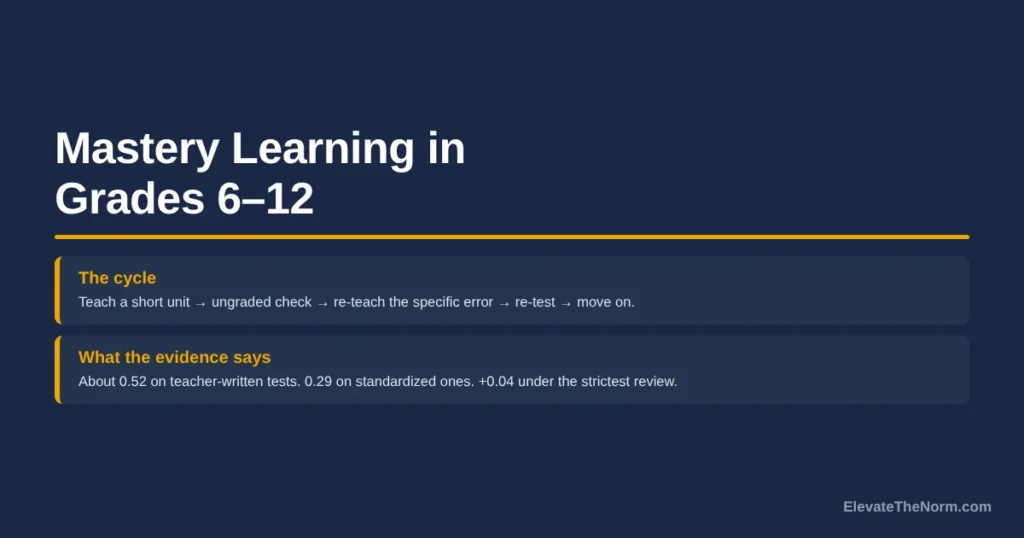
Mastery Learning in Grades 6–12: What It Is, What the Evidence Shows, and How to Run It
Mastery learning is a teach, check, re-teach, re-test cycle. The evidence gives it about 0.52 on teacher-written tests and 0.29 on standardized ones — here is what that means for a grades 6–12 classroom, and how to run one loop.
-
The Jigsaw Method in Grades 6–12: How to Run It So Students Actually Teach Each Other
The jigsaw method splits a text into sections and makes each student the expert on one. Here is how to run it in a single period in grades 6–12, what the research actually shows, and the four places it breaks.
-
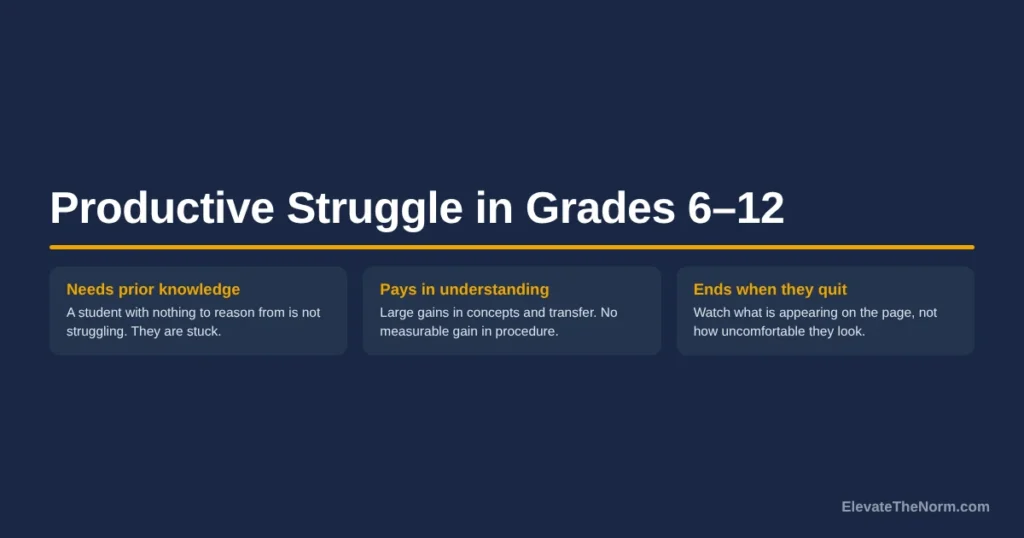
Productive Struggle in Grades 6–12: When to Let Students Wrestle and When to Step In
Productive struggle improves conceptual understanding and transfer in grades 6-12, not procedural fluency, and only when students have enough prior knowledge to begin. Here is the evidence, the case against it, and how to tell struggle from a student who is stuck.

