
Classroom Management and PBL Blog for Grades 6-12 Teachers
-
Close Reading in Grades 6–12: The Three Passes, and the Research Nobody Ran
Close reading means several passes over one short, hard text, each with its own question. Here is the protocol, what the federal evidence actually backs, and why the researcher most associated with it says the comparison studies do not exist.
-
Anticipation Guide: How to Build One and What the Evidence Shows
An anticipation guide is a short list of arguable statements students take a position on before reading, then revisit with evidence from the text. The three-phase protocol, what makes a statement usable, and an honest look at how thin the research actually is.
-
Depth of Knowledge: What Webb’s Four Levels Actually Measure
Depth of knowledge is Webb’s four-level scale for how complex the thinking a task demands is, not how hard the task is. The four levels, why it isn’t Bloom’s taxonomy, how to level a question you already wrote, and the four ways schools get it wrong.
-
Interactive Read Aloud: How to Plan, Pause and Get Students Talking in Any Grade
An interactive read aloud turns a text into shared thinking. Here is what it is, how to do a read aloud step by step, a lesson plan outline, question stems, and how it changes from kindergarten to high school.
-
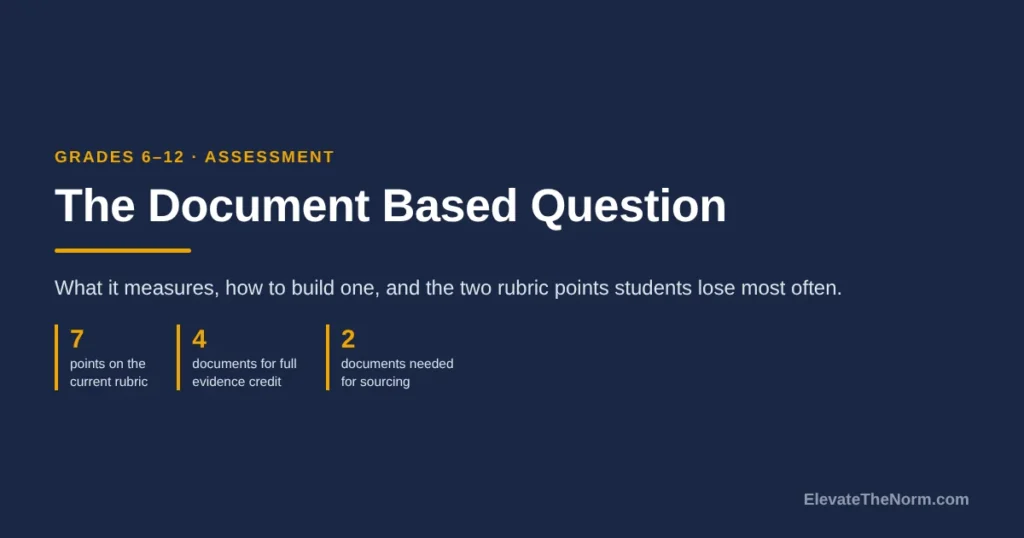
How to Teach a Document Based Question in Grades 6–12
A document based question gives students a prompt and a set of primary sources and asks them to build one argument from the evidence. What it measures, how to build one, how to score it, and the rubric thresholds that changed.

