
Classroom Management and PBL Blog for Grades 6-12 Teachers
-
Interactive Notebooks in Grades 6–12: What the Evidence Says and How to Grade Them
An interactive notebook pairs course input with the student’s own processing of it on the facing page. The direct evidence in grades 6–12 is thinner than teachers are told — here is what actually holds up, what to put on the student page, and how to grade it without grading neatness.
-
Formative vs Summative Assessment: The Difference, and How to Use Both in Grades 6–12
Formative assessment happens during learning to decide what to teach next; summative assessment happens after it to record what was learned. The real difference is what the result is used for, not the format of the task — with the honest effect sizes and the gradebook rule that decides whether any of it works.
-
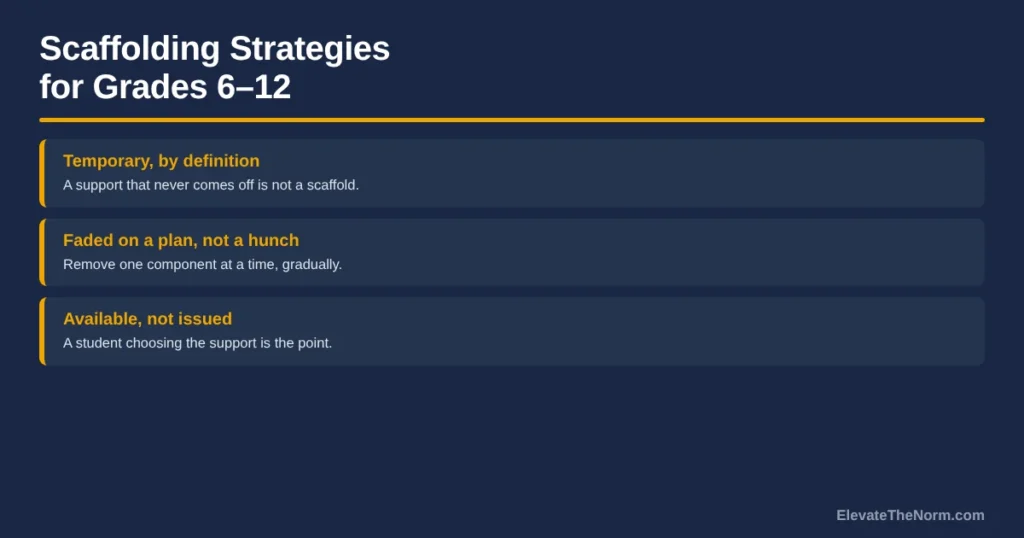
Scaffolding Strategies for Grades 6–12: Eight That Work, and When to Take Them Away
Scaffolding strategies for grades 6-12: eight scaffolds that work, what the evidence actually shows, and how to fade a support without losing half the class.
-
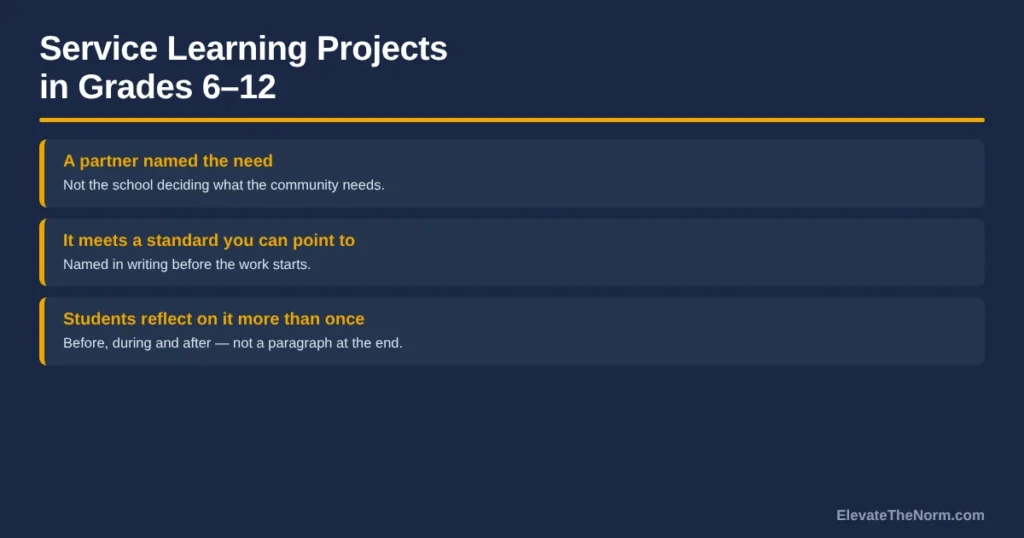
Service Learning Projects in Grades 6–12: The Eight Quality Standards and How to Plan One
Service learning projects in grades 6-12: the eight K-12 quality standards, what the research actually shows, four project types, and a semester planning sequence.
-
Capstone Project Ideas for Grades 8–12: How to Scope One and 15 Ideas That Hold Up
Capstone project ideas for grades 8-12: how to scope a capstone by grade, set up mentors and checkpoints, and 15 ideas that hold up.

