
Classroom Management and PBL Blog for Grades 6-12 Teachers
-
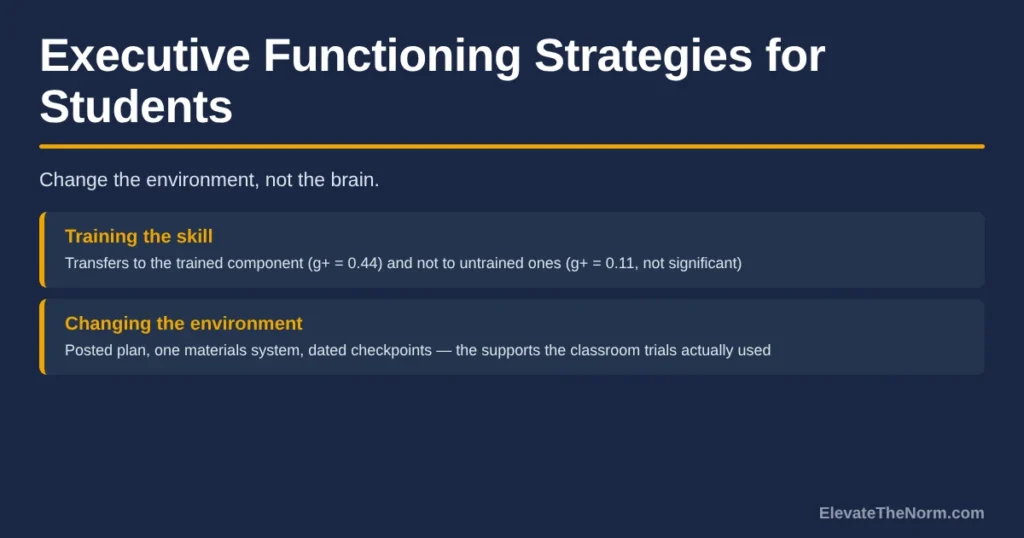
Executive Functioning Strategies for Students: What Works in Grades 6–12
Training executive function transfers to the trained skill and almost nowhere else. The strategies with real classroom evidence change the environment instead: a posted plan, one materials system, dated checkpoints.
-
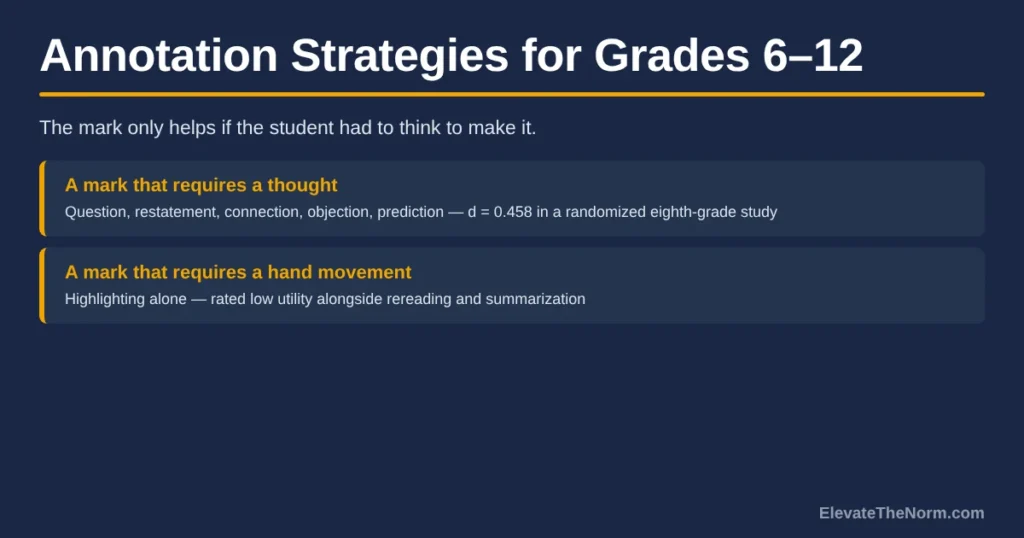
Annotation Strategies for Grades 6–12: What the Evidence Supports
Annotation strategies only help when the mark requires a thought. Here is the evidence behind them, the five marks worth teaching, the one that does nothing, and the dose that produced the only secondary result anyone has.
-
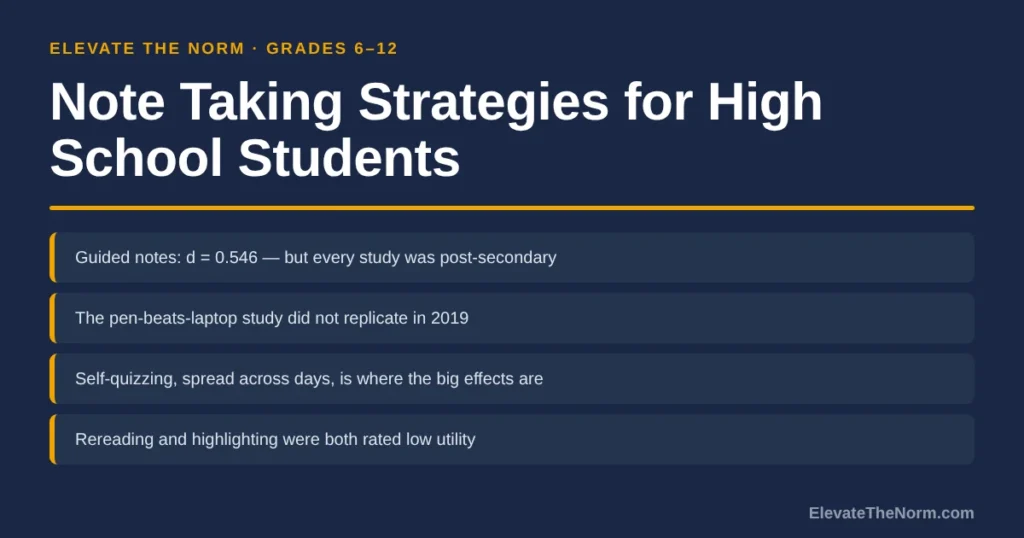
Note Taking Strategies for High School Students: What the Research Supports
The note taking strategies with the best evidence for high school students: guided notes, a question margin, and self-quizzing. What the famous pen-versus-laptop study actually found, why its 2019 replication failed, and the review routine that does most of the work.
-
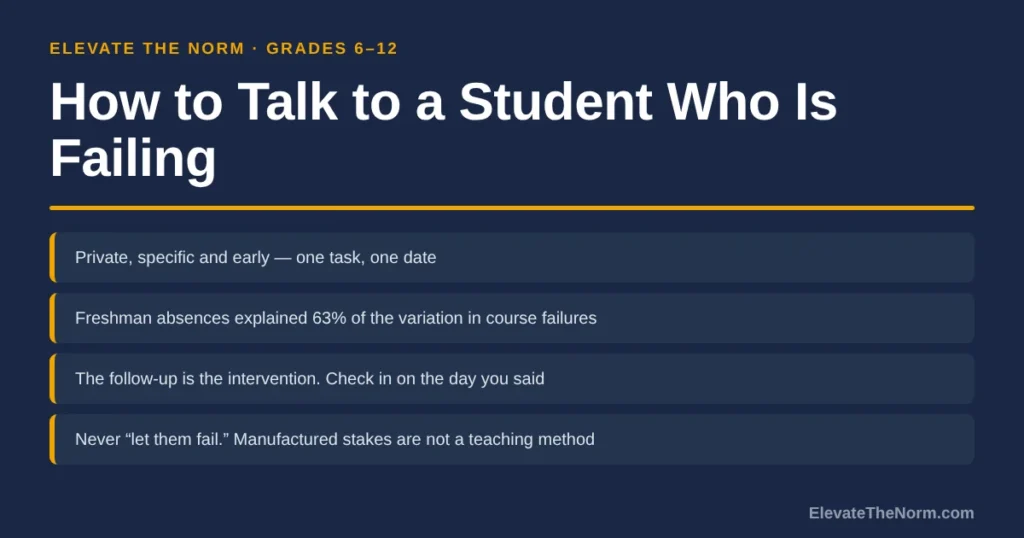
How to Talk to a Student Who Is Failing: What to Say, and When
Talk to a student who is failing privately, early, and about one specific thing. The six-move structure, the four very different problems a failing grade can mean, the sentences to leave out, and what the research actually supports — including the trial that found no effect on graduation.
-
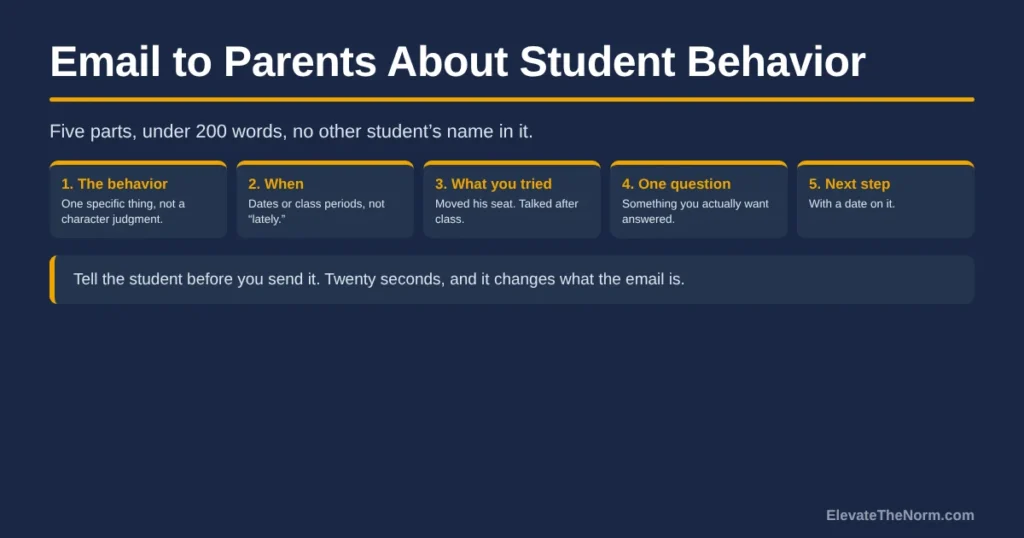
Email to Parents About Student Behavior: What to Write and What to Leave Out
A behavior email should name one specific behavior, say when it happened, state what you already tried, ask one real question and propose a dated next step. Three free sample emails, what the research says actually works, and the list of things that should never appear in one.

