
Classroom Management and PBL Blog for Grades 6-12 Teachers
-
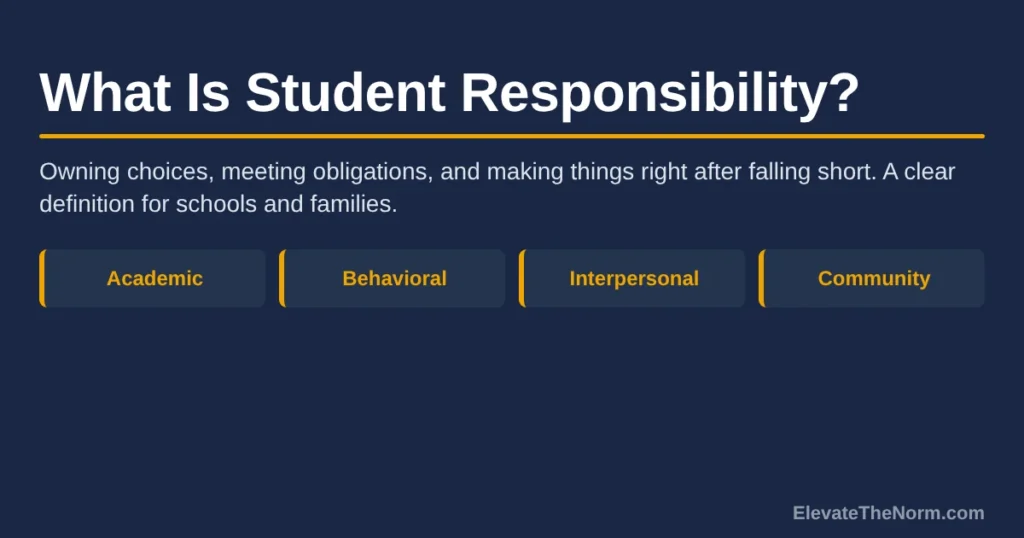
What Is Student Responsibility? A Clear Definition for Schools and Families
Student responsibility is the capacity to own one’s choices, meet commitments, and learn from mistakes without being rescued from the consequences. This article defines student responsibility clearly, explains why it differs from obedience, and gives teachers and families concrete strategies for building it in grades 6–12.
-
Project Based Learning Tools: Free Templates for Teachers
Project based learning tools are the planning templates, feedback protocols, and assessment forms that give teachers and students a shared system for managing complex, multi-week work. This guide covers driving question templates, team contracts, critique protocols, and assessment rubrics—with free resources for every tool.
-
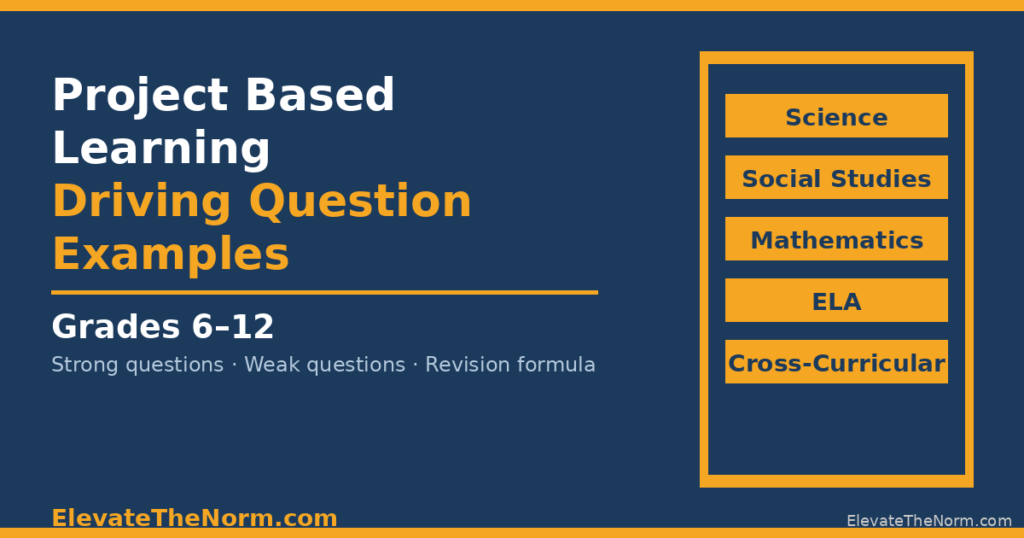
Project Based Learning Driving Question Examples for Grades 6–12
Strong driving questions are the engine of every successful PBL unit. Here are real examples across science, social studies, math, and ELA — with an explanation of what makes each work, a side-by-side comparison of weak versus strong questions, and a five-step revision formula teachers can use today.
-
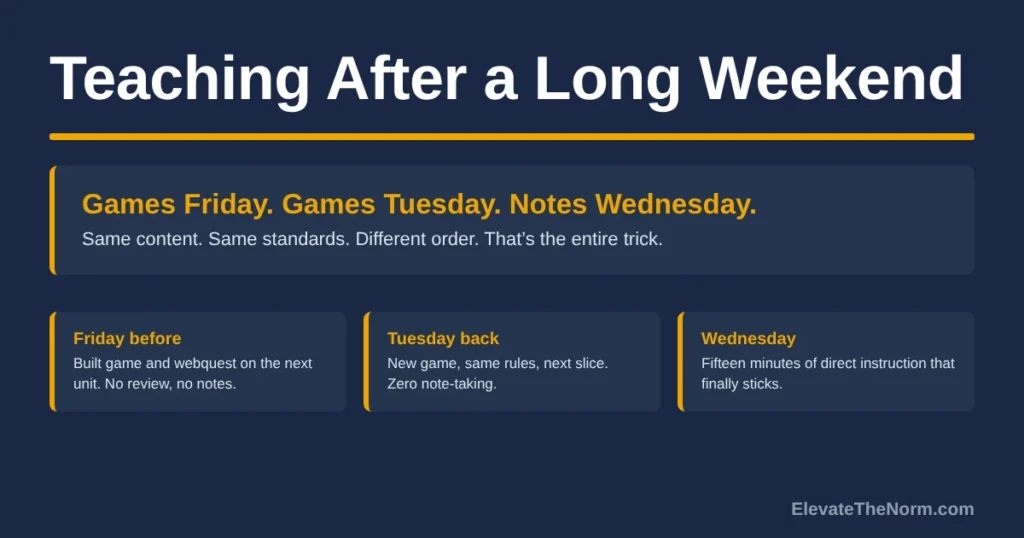
Teaching After a Long Weekend: A 3-Day Weekend Classroom Plan
The Friday before and the Tuesday after a long weekend are the two days most teachers write off. Here’s the built-game and webquest plan I use to introduce new material on both of them — and why notes don’t get taken until Wednesday.
-
Project Based Learning High Schools Can Use Without Rebuilding the Schedule
Project-based learning in high schools works inside ordinary bell schedules, existing standards, and standard grading systems. Three implementation models — single-teacher, coordinated, and schoolwide — with practical guidance on scaffolding, special populations, and what administrators must protect.

