
Classroom Management and PBL Blog for Grades 6-12 Teachers
-
Responsibility Scenarios for Middle School Students: 15 Real Situations to Discuss
Fifteen realistic responsibility scenarios for middle school students, from missed deadlines to group chats, with a ten-minute discussion routine and what to look for in a responsible answer.
-
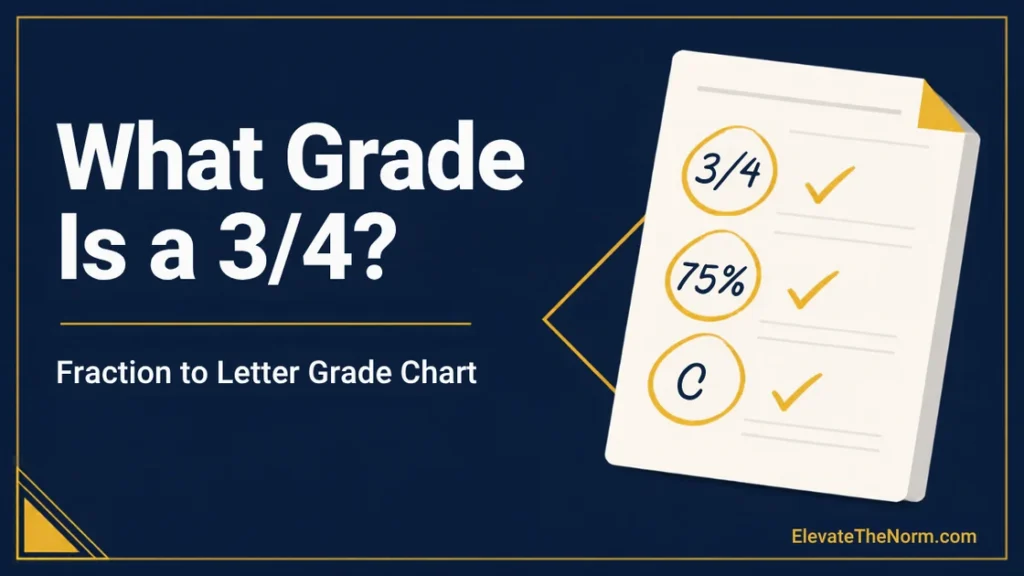
What Grade Is a 3/4? Fraction to Letter Grade Chart for Any Score
A 3/4 is 75 percent, a C on the common 10-point scale. Here is how to turn any fraction score into a percent and a letter grade, with full charts for scores out of 4, 5, 8, 10, 20 and 25.
-
Progress Monitoring in Grades 6–12: How to Tell If an Intervention Is Working
Progress monitoring is repeated, standardized measurement of a student who is already in an intervention, graphed against a goal. Here is what the evidence supports, how much data a decision actually needs, and which measures hold up in grades 6-12.
-
Reciprocal Teaching in Grades 6–12: The Four Strategies, and What the Evidence Shows
Reciprocal teaching has students take turns leading a group through predicting, questioning, clarifying and summarizing. Here is what the effect sizes really show, why they disagree, and how to run it in one secondary class period.
-
Cognitive Load Theory: What It Claims, and What the Evidence Supports in Grades 6–12
Cognitive load theory says working memory handles only a few new elements at once. Here is what its named effects actually show, who was tested, how load is measured, and what it does not license in a grades 6-12 classroom.

