
Classroom Management and PBL Blog for Grades 6-12 Teachers
-
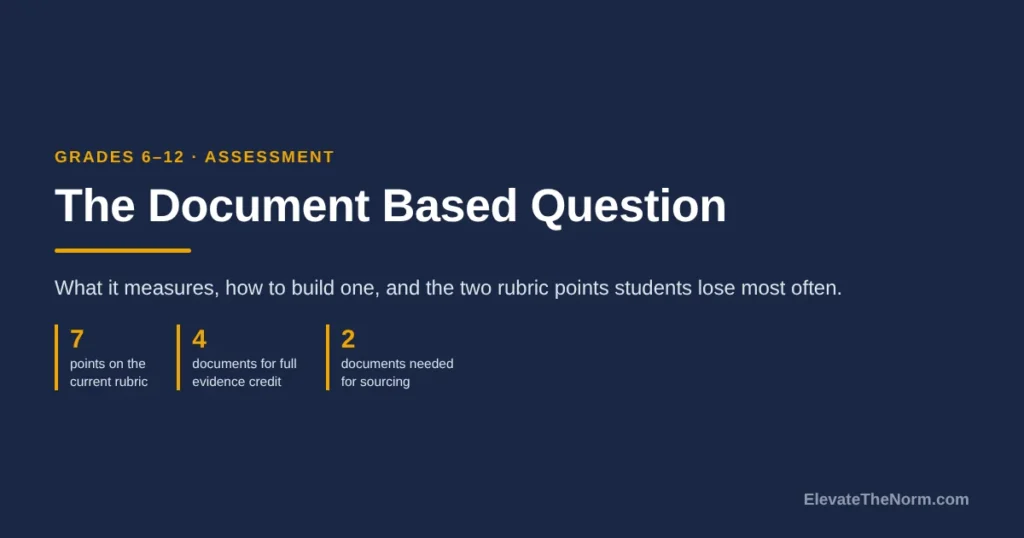
How to Teach a Document Based Question in Grades 6–12
A document based question gives students a prompt and a set of primary sources and asks them to build one argument from the evidence. What it measures, how to build one, how to score it, and the rubric thresholds that changed.
-
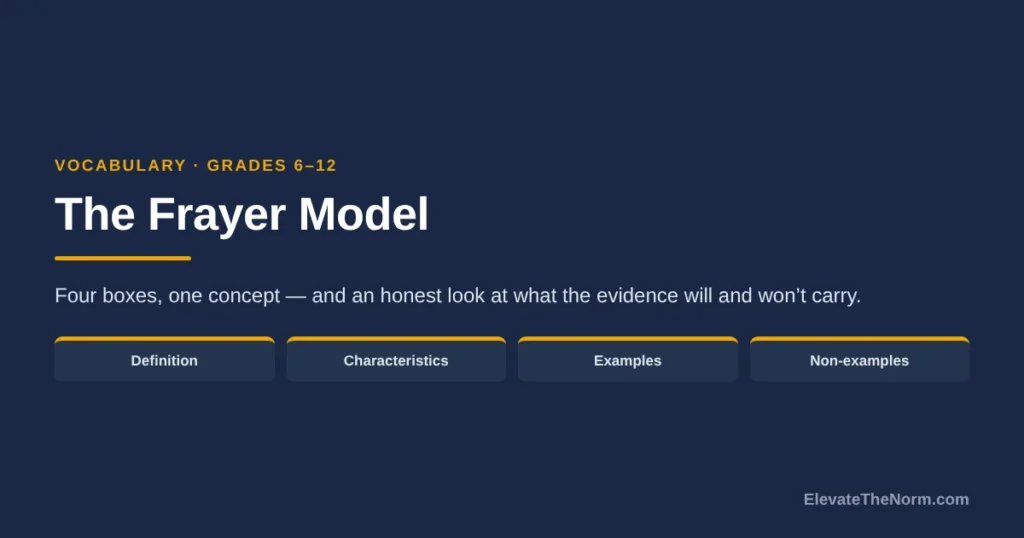
The Frayer Model: When Four Boxes Beat a Definition List
The Frayer Model surrounds one concept with a definition, characteristics, examples and non-examples. Here is what the four boxes do, which words deserve one, how to run it in a grades 6-12 content class, and what the evidence will and will not carry.
-
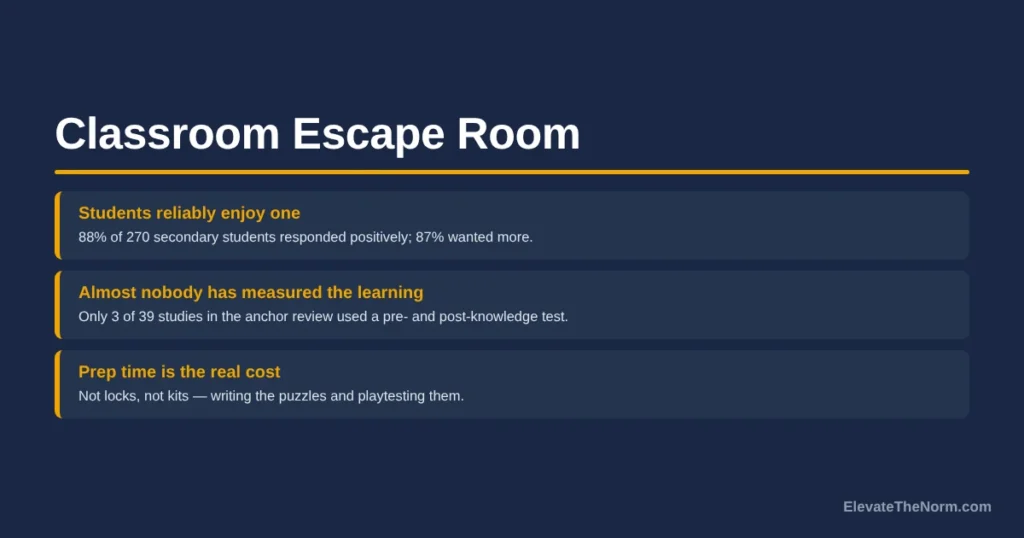
Classroom Escape Room: How to Build One for Grades 6–12 Without Losing a Week
A classroom escape room is a timed puzzle sequence students unlock by solving content problems. Students reliably enjoy one; the measured learning evidence is thin. Here is what the research shows, what the build actually costs, and how to run one in 50 minutes.
-
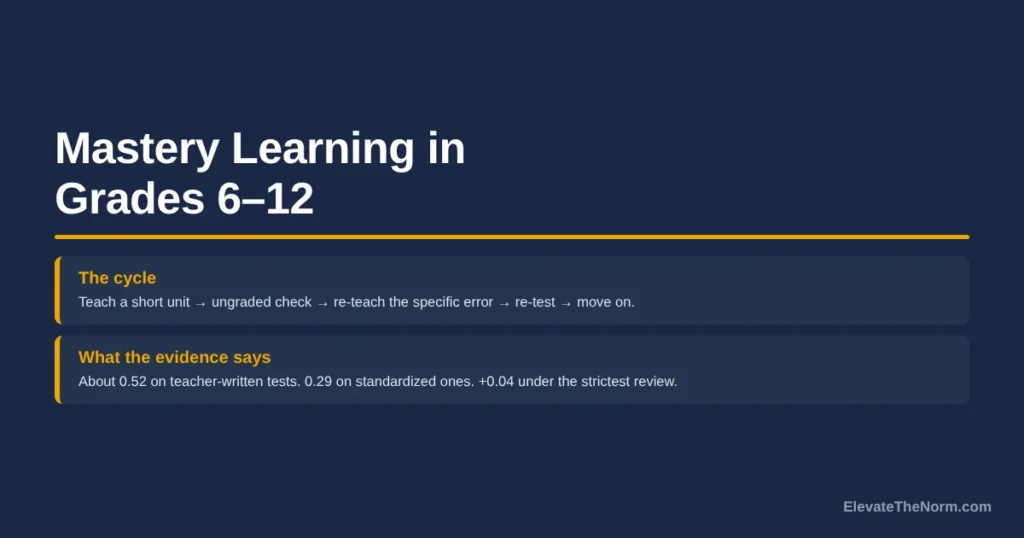
Mastery Learning in Grades 6–12: What It Is, What the Evidence Shows, and How to Run It
Mastery learning is a teach, check, re-teach, re-test cycle. The evidence gives it about 0.52 on teacher-written tests and 0.29 on standardized ones — here is what that means for a grades 6–12 classroom, and how to run one loop.
-
The Jigsaw Method in Grades 6–12: How to Run It So Students Actually Teach Each Other
The jigsaw method splits a text into sections and makes each student the expert on one. Here is how to run it in a single period in grades 6–12, what the research actually shows, and the four places it breaks.

