
Classroom Management and PBL Blog for Grades 6-12 Teachers
-
The Think Aloud in Grades 6–12: How to Model Thinking Students Can’t See
A think aloud is a teacher narrating their own reasoning out loud so students can hear the moves an expert makes in silence. What the federal evidence actually covers, why no think-aloud effect size exists, and five steps to build one.
-
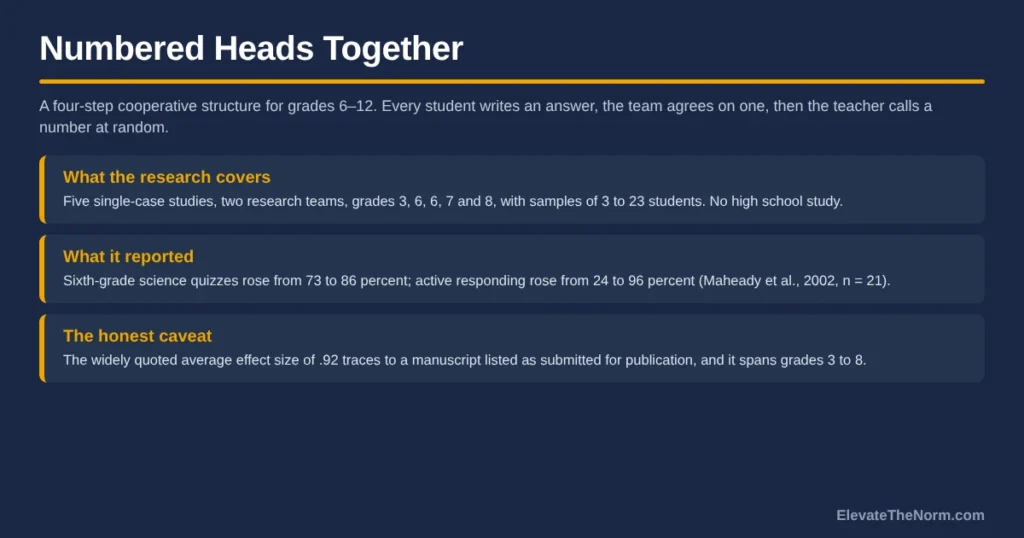
Numbered Heads Together: How the Structure Works and What the Evidence Really Says
Numbered heads together makes every student answerable because nobody knows who will be called. Five small single-case studies back it, none above eighth grade, and the effect size everyone quotes traces to an unpublished manuscript. Here is the structure and the honest record.
-
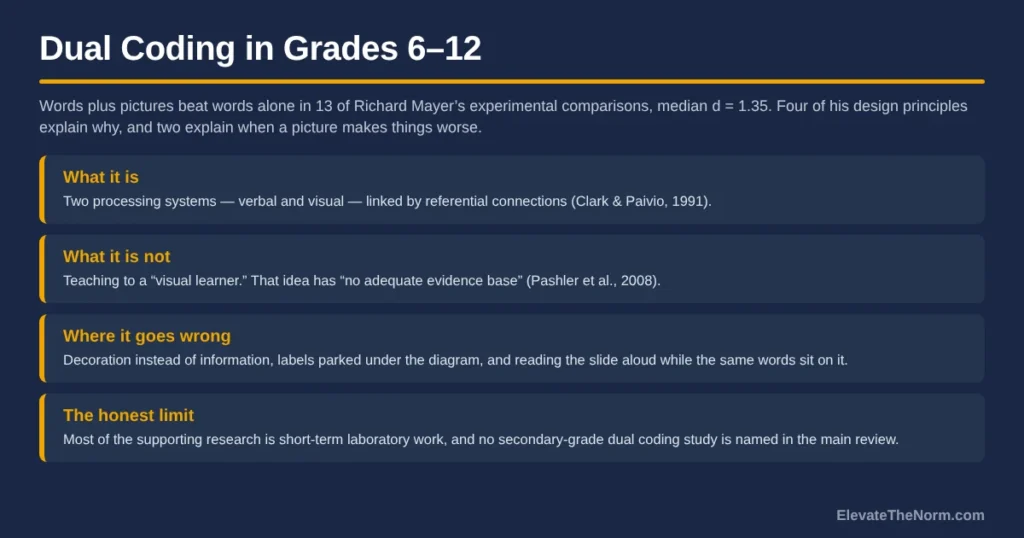
Dual Coding in Grades 6–12: Why Words Plus Pictures Work, and Where It Goes Wrong
Words plus pictures beat words alone by a median effect size of 1.35 across 13 of Mayer’s comparisons – almost all of them short-term lab studies. Here is what dual coding actually claims, why it is not learning styles, and the two design choices that do nothing.
-
Peer Tutoring in Grades 6–12: What the Evidence Actually Shows
Peer tutoring averages six months of additional progress across 145 studies, and the best-designed secondary trial found nothing for the students being tutored. Here is what holds up at grades 6-12, who actually gains, and how to run a block.
-
Responsibility Scenarios for Middle School Students: 15 Real Situations to Discuss
Fifteen realistic responsibility scenarios for middle school students, from missed deadlines to group chats, with a ten-minute discussion routine and what to look for in a responsible answer.

