Classroom Management and PBL Blog for Grades 6-12 Teachers
-
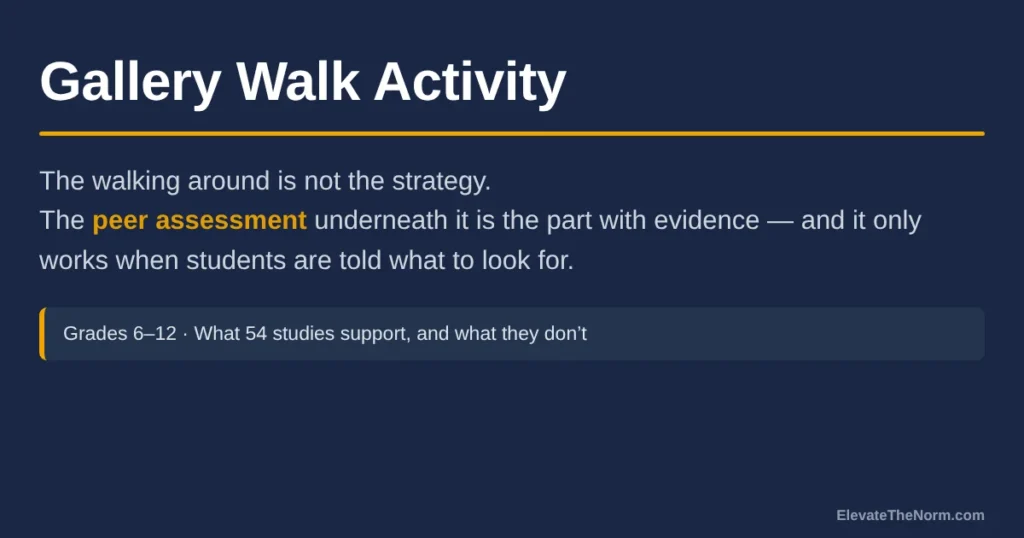
Gallery Walk Activity: How to Run One So the Feedback Is Worth Reading
A gallery walk activity posts student work around the room and sends classmates around to leave written feedback. The walking is not the strategy. Here is what the peer assessment research actually supports, the one study at the right grade level and why it is weaker than it looks, and a six-step version for grades…
-
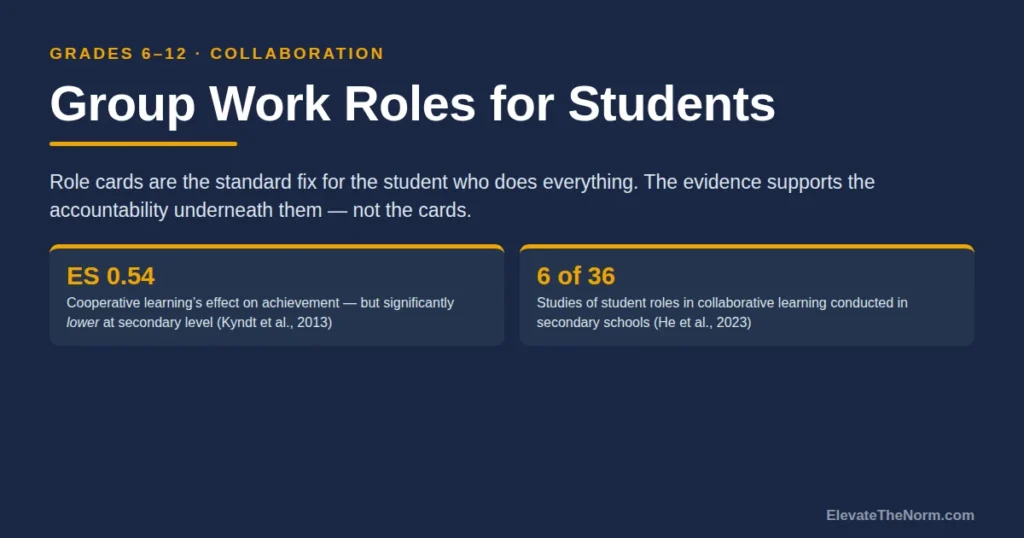
Group Work Roles for Students: What the Evidence Supports, and What It Doesn’t
Group work roles for students are supposed to stop one kid doing everything. The evidence backs the accountability underneath them, not the role cards — plus five tests a role has to pass.
-
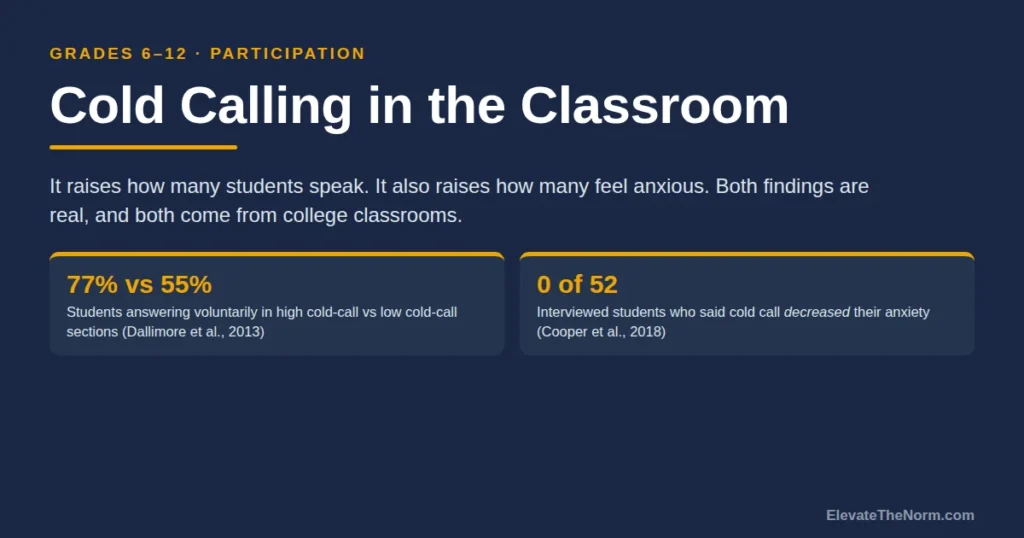
Cold Calling in the Classroom: What the Research Says and How to Do It Without the Gotcha
Cold calling in the classroom raises how many students speak and how many feel anxious — both findings are real. What the research measured, who it measured, and six moves that keep it from becoming a gotcha.
-
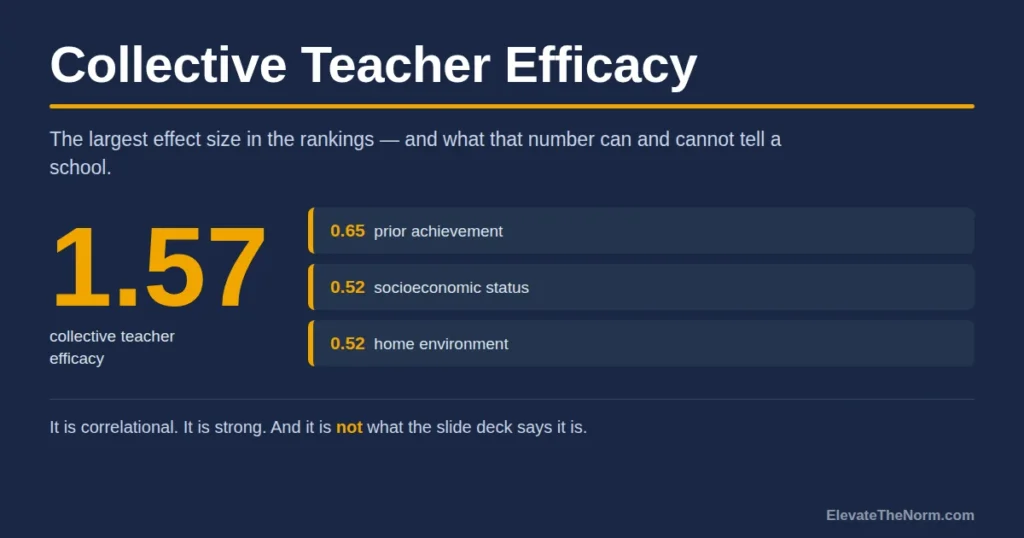
Collective Teacher Efficacy: What the 1.57 Effect Size Actually Means
Collective teacher efficacy carries the largest effect size in Hattie’s rankings at 1.57. It is correlational, it is almost certainly larger than any causal effect, and the rebuttal was published in the same journal. Here is what the number supports, what it does not, and what a grades 6-12 department can actually do with it.
-
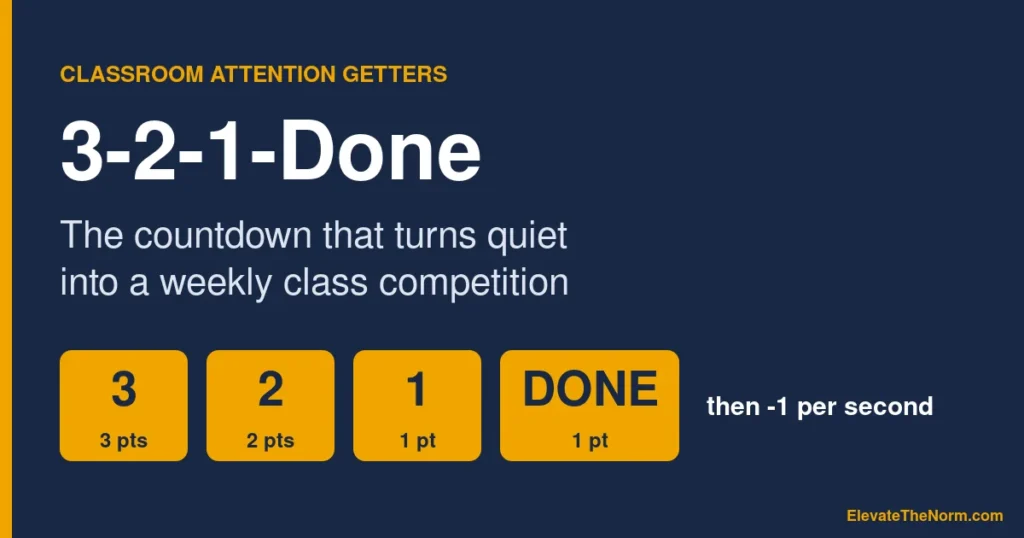
Classroom Attention Getters: The 3-2-1-Done Method That Took Six Weeks to Work
Classroom attention getters only work in grades 6–12 when students have a stake in answering them. Here is the 3-2-1-Done method — a countdown with a weekly class competition attached — plus the scoring, the reward, and why buy-in took six weeks.