
Classroom Management and PBL Blog for Grades 6-12 Teachers
-
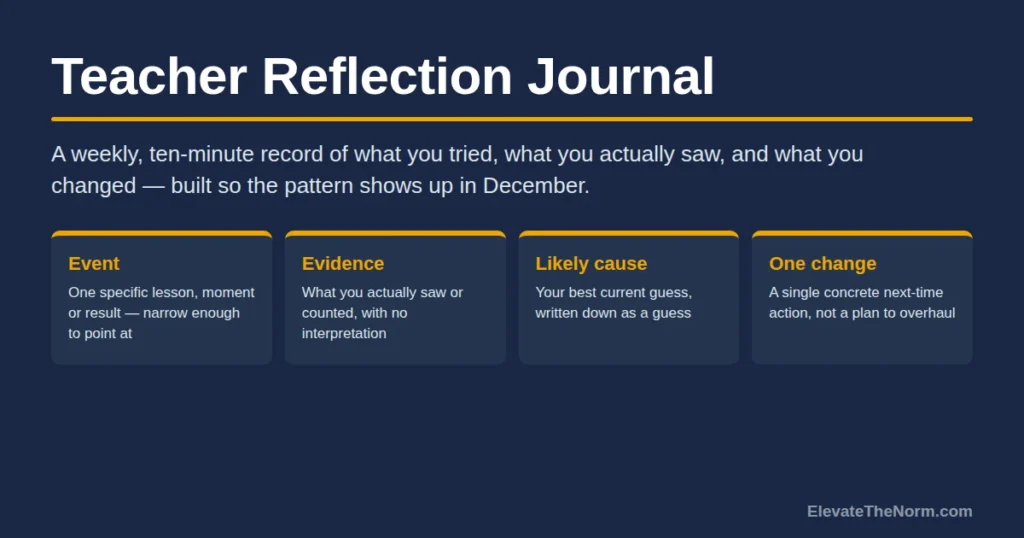
Teacher Reflection Journal: What to Write, How Often, and What to Skip
A teacher reflection journal is a weekly record of what you tried, what you actually saw, and what you changed — with a four-line entry format, a ten-minute routine, and an honest look at what the evidence supports.
-
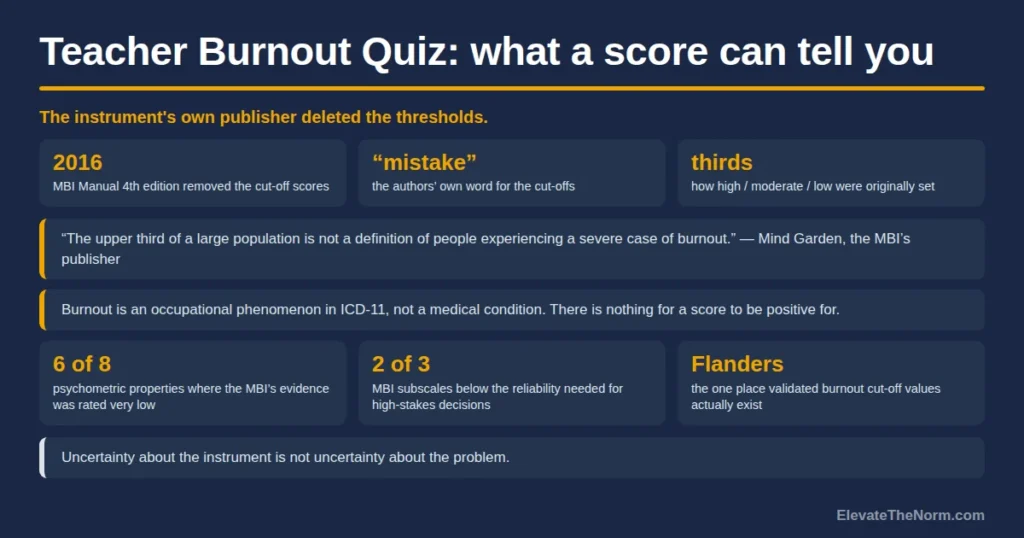
Teacher Burnout Quiz: What a Score Can Tell You, and What It Can’t
No online teacher burnout quiz can tell you whether you have burnout. The Maslach Burnout Inventory’s publisher removed its cut-off scores in 2016 for having no diagnostic validity. Here is what the measurement research actually supports, and a five-question reflection sheet that returns no score.
-
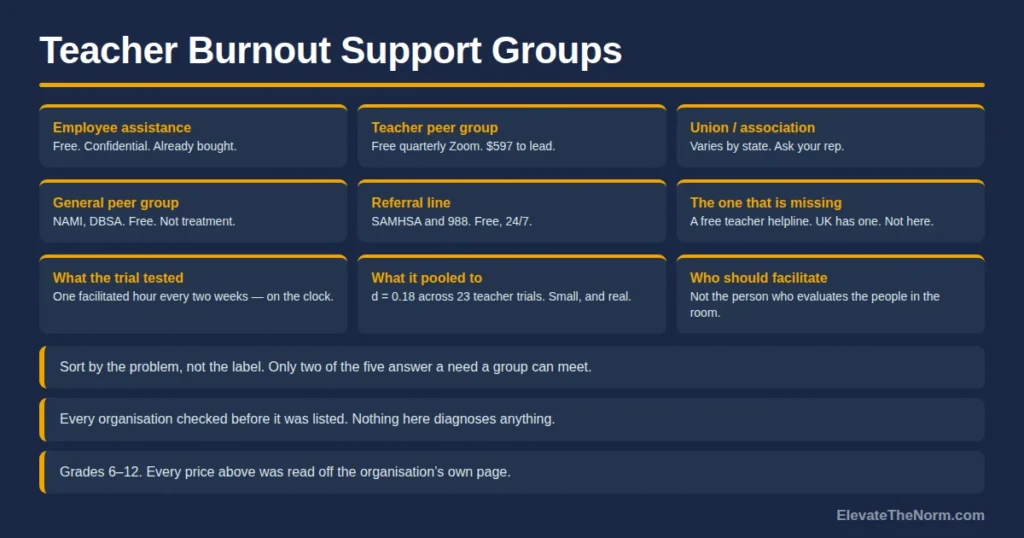
Teacher Burnout Support Groups: What Actually Exists, and What Each One Is For
There is no free, national, teacher-only burnout support group in the United States. Five different things get called support — the employee assistance programme, a teacher peer group, your union, a general peer group and a referral line. Each one checked, with what it costs, what the research says, and which problem it actually answers.
-
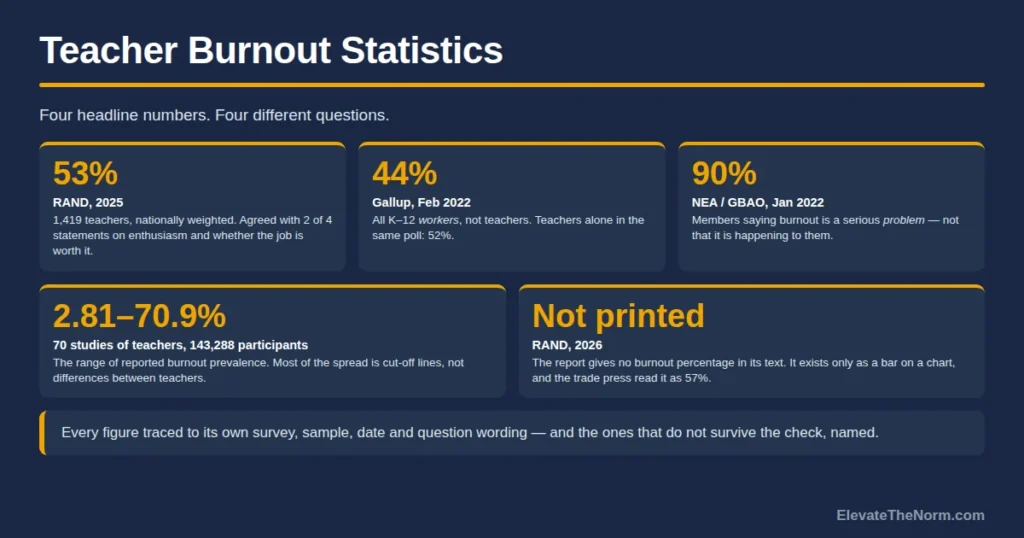
Teacher Burnout Statistics: Where Each Number Actually Comes From
There is no single teacher burnout rate. The most-quoted figures — 53 percent, 44 percent, 90 percent — come from four different surveys asking four different questions of four different groups. Every number traced to its own survey, sample, date and question wording, plus a five-question check for the next one somebody hands you.
-
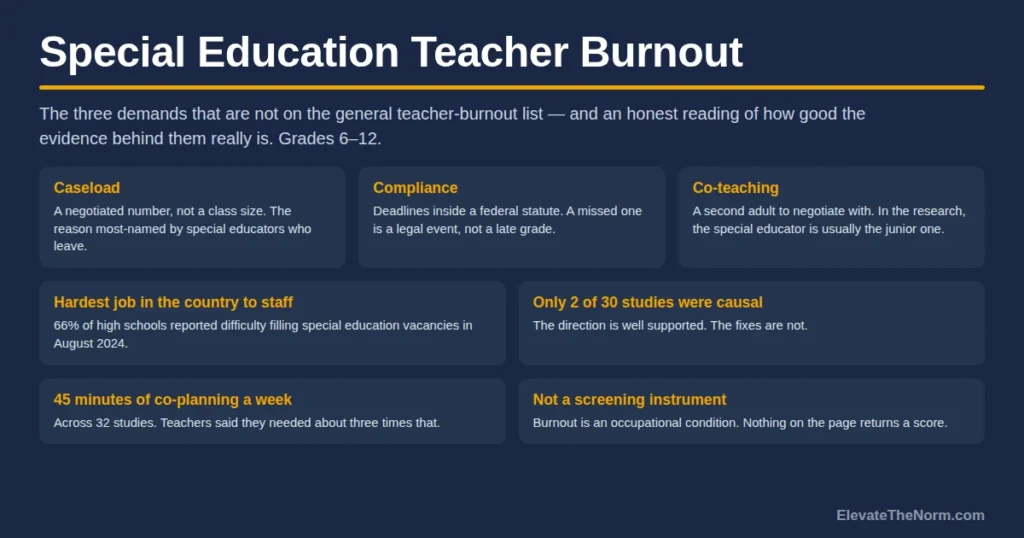
Special Education Teacher Burnout: The Three Loads That Are Not on the General List
Teacher burnout in special education runs on demands the general list does not contain: caseload as a negotiated number, compliance work with statutory deadlines, and co-teaching as a relationship rather than a resource. What the retention and co-teaching research actually shows, what the staffing data says, which famous figure to stop repeating, and a four-part…

