By Clay Shumate
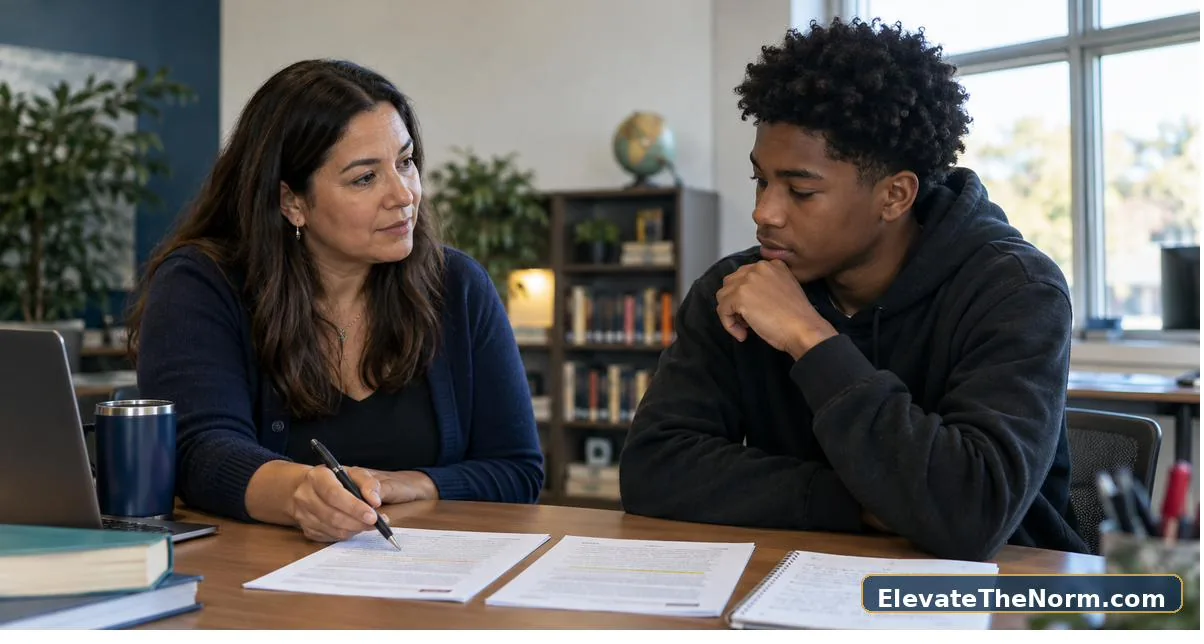
Responding to an academic integrity violation fairly starts before the violation happens. This free pack gives secondary teachers a preventive instruction checklist for setting clear boundaries around collaboration and AI use before an assignment is due, a fact record for documenting observable evidence without diagnosing motive, a conversation guide built around facts and process rather than an accusation, and a repair-and-reassessment plan that asks what the current submission actually proves — and what has to be redone to prove real learning.
Free. No email address required. Built for grades 6–12. Print it, adapt it, and use it tomorrow.
Before a response is needed, it helps if everyone agrees what counts. Eighteen concrete academic honesty situations works through the cases that actually come up in a secondary room, including the ones students genuinely do not know are violations.
Before the response comes the definition. If your students cannot state where the line falls in your class, start with the plain-language definition built for grades 6 through 12 — the six values, what the cheating numbers really show, what AI did and did not change, and how to teach the line instead of only enforcing it.
What’s in the Pack
Four pages, printable on US Letter paper, branded ElevateTheNorm.com on every page.
- Preventive instruction checklist covering assignment design and student clarity, including AI-use rules
- Academic integrity fact record for observed evidence, comparison source, and student explanation
- Conversation and repair plan structured around facts, sourcing, and what the work can currently prove
- Repair conditions including deadline, redo requirements, and a path to restored standing
Documenting Facts Before the Conversation
The fact record’s fields — observed evidence, comparison source or process evidence, student explanation in their own words — are built in that order deliberately. Gather what you can observe and compare before the conversation, so the conversation itself can focus on the student’s explanation rather than becoming the moment you’re still assembling evidence.

Setting AI-Use Rules Before Assignments Go Out
The preventive checklist explicitly asks whether and how AI tools may be used on an assignment — state that rule in writing before the assignment is due, not after a concern surfaces. Ambiguity about AI use is one of the fastest ways a well-intentioned student ends up in a conversation that didn’t need to happen.

A Caution Worth Repeating
This pack is a process framework, not a substitute for your school or district’s academic integrity policy — follow your required reporting and notification steps alongside these forms, not instead of them. When writing that notification falls to you, there is a narrow version of the message that holds up later: what a teacher can defensibly put in writing to a family, which is shorter than most people expect. The fact record is deliberately built to avoid diagnosing motive; resist the urge to write conclusions about why a student did something into a record meant to hold only observable facts.

Want this pack plus the other nine, each with a one-page guide on how to use it? Grab the Classroom Systems Playbook, free. Same deal: no email, no sign-up.
For more on the ideas behind this pack, see the site’s guides to accountability and a real second chance, consequences that teach instead of humiliate, student responsibility in practice, and raising the standard without removing grace.
Browse every free, no-email classroom download on the Elevate the Norm resource hub.
Frequently Asked Questions
What should I document when I suspect an academic integrity violation?
Use the fact record: the assignment, class, and date; the observed evidence that raised the concern; a comparison source or process evidence; and the student’s own explanation in their own words. Avoid writing conclusions about motive into the record.
How should I talk to a student about a suspected violation?
Lead with facts, not accusations. The conversation guide starts with “what happened” and moves to what help or source was used and where it entered the work, before asking what the current submission can actually prove.
Does this pack cover AI-related academic integrity concerns?
Yes — the preventive checklist requires naming whether and how AI tools may be used before the assignment is due, and the fact record and conversation guide both work for AI-related concerns as well as traditional ones.
What if the student says they didn’t mean to violate the policy?
Intent matters for the consequence, but the repair plan’s core questions — what can the current work prove, what must be redone — apply either way, since the goal is accurate evidence of the student’s own learning.
Should parents or administrators be notified?
Follow your school and district policy for required notification and reporting — the fact record includes a field for “policy consulted and people notified” specifically so that step isn’t skipped.
What does a fair repair plan actually require from the student?
Typically a clear account of what happened, redoing or newly demonstrating the learning in question, and meeting a defined deadline and conditions — ending with a defined path to restored standing rather than an open-ended consequence.
How do I prevent violations instead of just responding to them?
Use the preventive instruction checklist before assigning the work: name allowed collaboration, state AI-use rules, require checkpoints or process evidence, and show a real acceptable and unacceptable example so expectations are clear in advance.
About Clay Shumate
Clay Shumate is a certified secondary Social Studies teacher in the public schools of West Alabama, with seven years of classroom experience, a B.A. in History, and an M.Ed. in Secondary Education. He writes about project-based learning, student responsibility, respect, and practical ways to hold young people to a higher standard while giving them room to learn from mistakes. He is a member of the Society of Professional Journalists and writes to its Code of Ethics; this site’s editorial standards and corrections policy are published in full.