By Clay Shumate
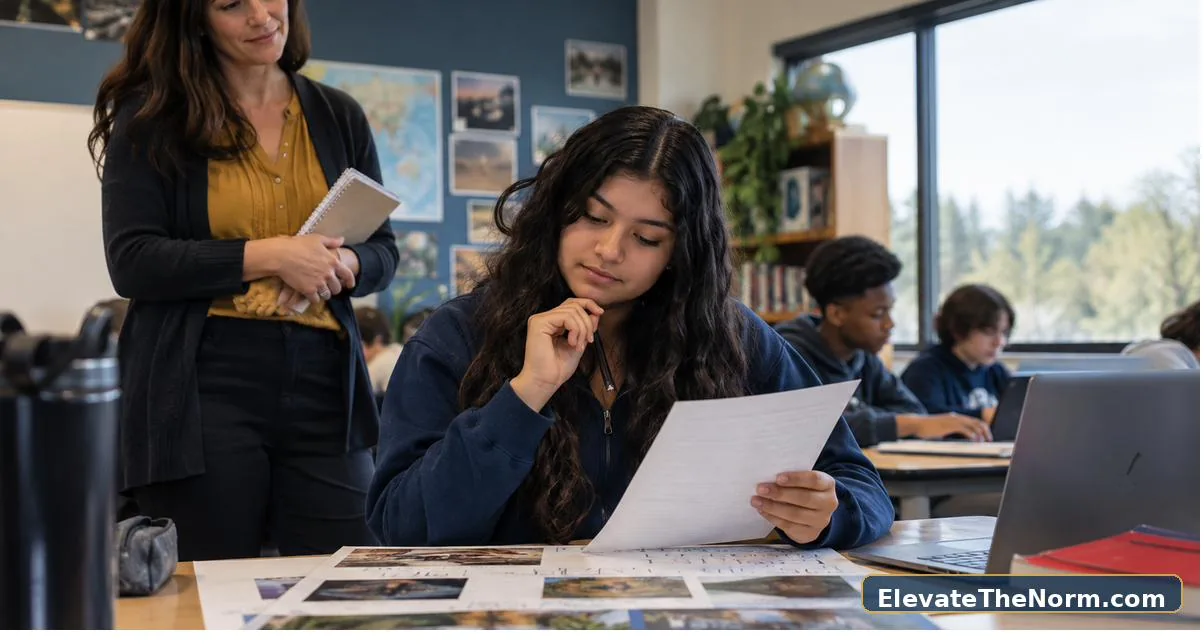
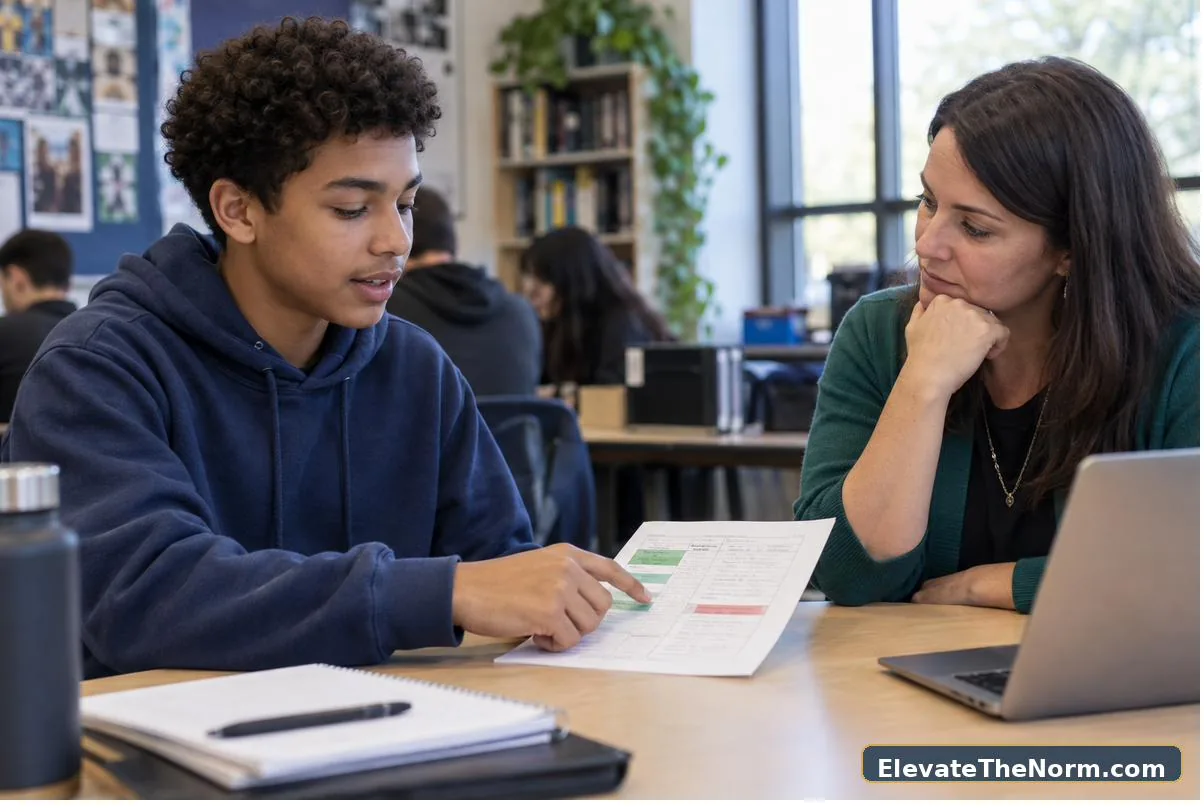
A student self-assessment form is only useful if it requires evidence instead of a confidence guess. This free pack gives secondary students four forms built around that rule: a general self-assessment where every rating needs a specific example, a project and revision reflection focused on decisions rather than whether the project was fun, a group-work accountability form completed individually before the group discusses its process, and a conference-prep form that connects directly to the site’s student-led conference toolkit. If a student can’t point to evidence for a rating, the form asks them to name what evidence would need to exist instead of letting the rating stand alone. The reasoning behind that rule, and the evidence that does and does not support it, is set out in the guide to what this practice is for and when it actually changes anything.
Free. No email address required. Built for grades 6–12. Print it, adapt it, and use it tomorrow.
What’s in the Pack
Four pages, printable on US Letter paper, branded ElevateTheNorm.com on every page.
- General self-assessment requiring evidence for every rating, plus a next action and deadline
- Project and revision reflection focused on defensible decisions and what changed from feedback
- Group-work accountability form covering participation, listening, communication, and responsibility
- Conference preparation form that feeds directly into a student-led conference
Using these forms in the week before conferences? The five fields, the forty-five minute prep sequence and the rule about never grading the rating are set out in the guide to running the conference version of this sheet without grading the rating.
Requiring Evidence for Every Rating
The general self-assessment’s core rule — every rating needs an example, and if there’s no evidence yet, the student writes what evidence must be created — is what separates this from a confidence survey. A student who rates themselves “strong” with no example hasn’t actually assessed anything; redirect them back to the evidence field before accepting the rating.
Individual Accountability Before Group Discussion
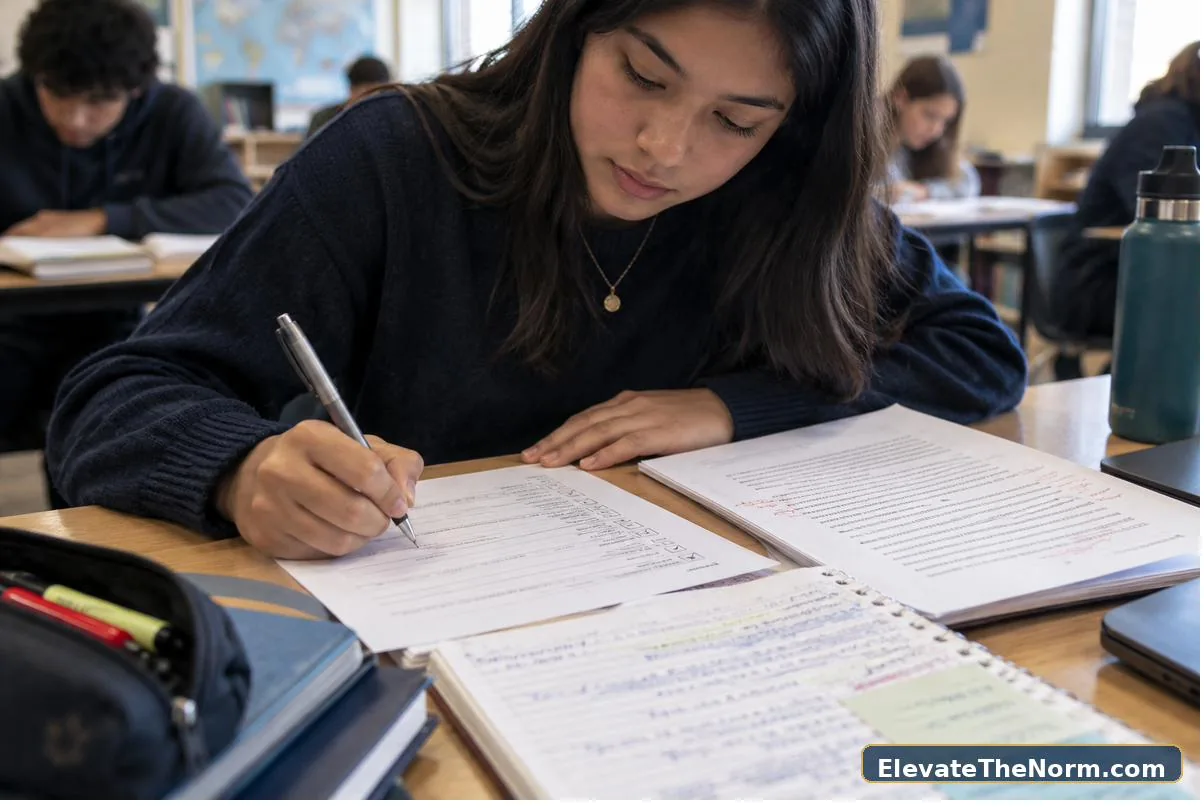
Complete the group-work form individually and collect it before any group conversation about how the project went. Students report participation, listening, and responsibility more honestly when they’re not shaping their answer around what a groupmate is about to say out loud. Which five prompts belong on that form, and why one overall rating beats a seven-category scorecard, is worked through in the guide to self-assessment on a project that carries one shared grade.

A Caution Worth Repeating
These forms ask students to be honest about barriers and low performance, which means some students will need explicit reassurance that an honest “developing” rating with real evidence is more useful — and safer — than an inflated one. Watch for students filling in ratings without evidence; that’s the exact pattern this pack is designed to interrupt, and it takes modeling to break.
Want this pack plus the other nine, each with a one-page guide on how to use it? Grab the Classroom Systems Playbook ebook. Same deal: no email, no sign-up.
For more on the ideas behind this pack, see the site’s guides to checking for understanding, practical student engagement strategies, giving students real ownership, and student responsibility in practice. Self-assessment works best alongside the teacher-side checks in this roundup of formative assessment strategies for secondary classrooms.
Browse every free, no-email classroom download on the Elevate the Norm resource hub.
Frequently Asked Questions
What if a student rates themselves highly with no real evidence?
Send the form back before accepting it. The whole design of this pack is that a rating without evidence isn’t a completed assessment — model the difference with a low-stakes example before students use the forms independently.
Are these forms graded or just for reflection?
That’s your call. Many teachers use completion (not accuracy) as the graded component, since grading the content of an honest self-assessment can push students toward inflated ratings.
How often should students use the general self-assessment?
Frequently enough that it becomes routine rather than a special event tied to report cards — many teachers use it at natural checkpoints like the end of a unit or project rather than on a fixed weekly schedule.
Can younger secondary students (6th-7th grade) use this?
Yes, with more modeling. The evidence requirement is a skill, not an assumption — expect to walk younger students through several examples before they can complete the forms independently.
Does the group-work form replace a peer evaluation?
No — it’s self-reported and individual, not a peer rating. It’s meant to surface a student’s honest view of their own participation, which is a different (and complementary) signal to peer feedback.
How does this connect to standards-based grading?
The general self-assessment’s evidence-first structure pairs naturally with a standards-based approach — see the site’s standards-based grading rubrics pack for a compatible four-level scale.
About Clay Shumate
Clay Shumate is a certified secondary Social Studies teacher in the public schools of West Alabama, with seven years of classroom experience, a B.A. in History, and an M.Ed. in Secondary Education. He writes about project-based learning, student responsibility, respect, and practical ways to hold young people to a higher standard while giving them room to learn from mistakes. He is a member of the Society of Professional Journalists and writes to its Code of Ethics; this site’s editorial standards and corrections policy are published in full.