By Clay Shumate
Most secondary classrooms run on a short list of boring, refillable supplies: pencils, paper, sleeves, markers, folders, cards, clipboards, sticky notes, and clips. The goal is to stretch a limited budget across five or six class periods, so every item has to earn its spot by getting used the very next day.
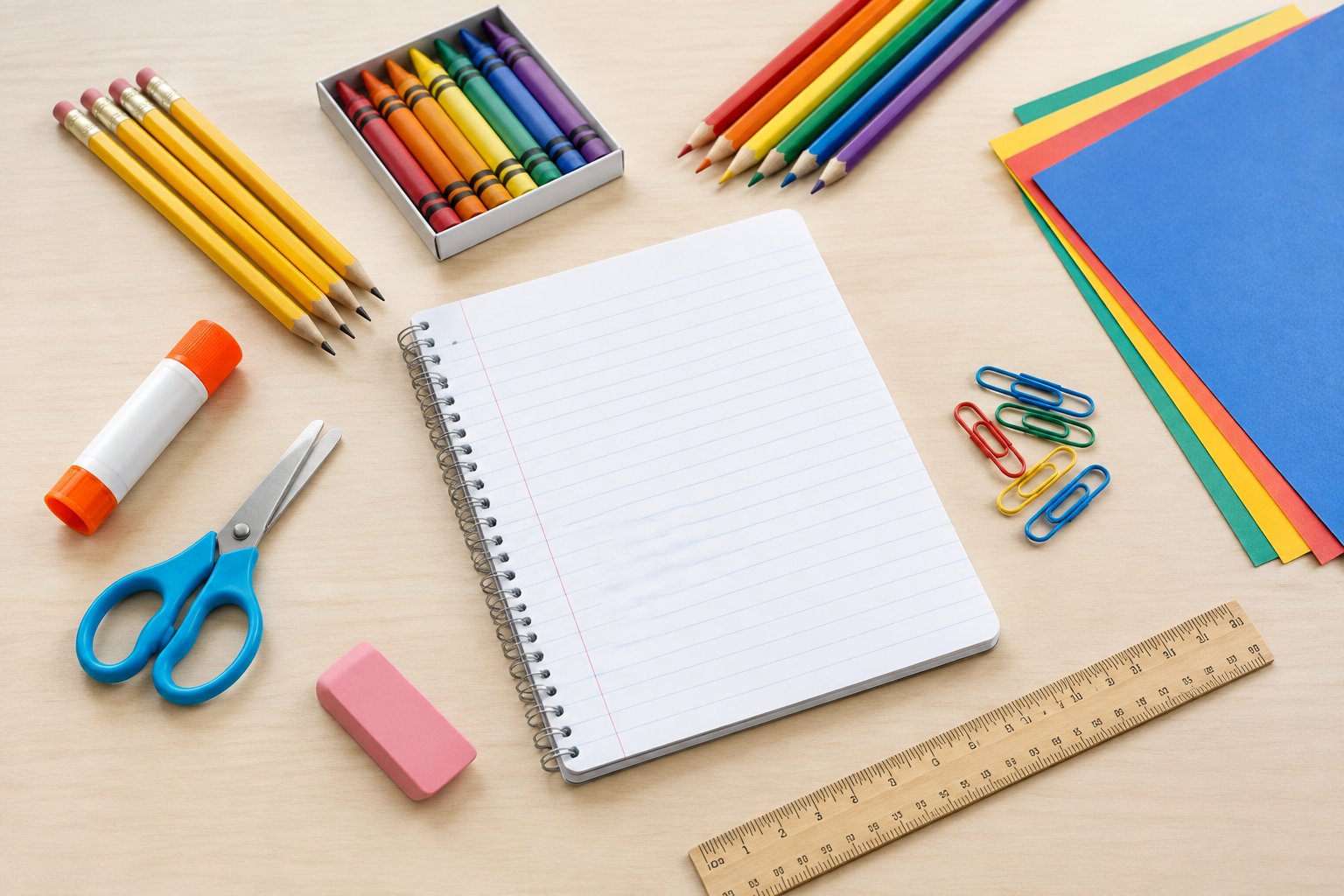
For grades 6–12 teachers working on a tight budget, the top cheap classroom supplies are bulk No. 2 pencils, plain copy paper, and reusable dry-erase sleeves, because they get used by every class period, every day, and the sleeves turn one printed page into dozens of uses. Plan how students will borrow and return those supplies before buying anything else, since a supply without a routine disappears by October. New to the classroom? Start with the guide to classroom management for new teachers.
One note applies to the whole list. Prices, pack sizes, and shipping change constantly, so check the delivered cost on the day you order.
Quick picks:
- Best first step: a free routines checklist before spending anything.
- Best everyday buy: bulk No. 2 pencils for every period.
- Best reuse value: dry-erase sleeves paired with low-odor markers.
- Best for organization: two-pocket folders and binder clips.
1) Elevate the Norm’s Free Routines and Procedures Checklist
The first recommendation costs nothing to download. The Routines and Procedures Checklist is a printable planning pack with space to write your own procedures for entry, materials, help-seeking, transitions, late arrival, and turning in work.
No email address is required to download it. Printing does cost something, whether that’s school copier paper or your own home ink, so print only the pages you’ll fill out.
Here’s why it sits ahead of every physical supply:
- It tells you what to buy. Once you’ve written how students borrow a pencil, you know how many pencils you need.
- It prevents waste. Supplies without a procedure get lost, broken, or hoarded.
- It doubles as sub material. A completed checklist shows a substitute how your room runs.
Next-day use: Fill in the materials and help-seeking sections tonight. Tomorrow, teach just those two procedures in the first five minutes and practice them once with each class.
If you want more background before writing your own, the broader guide on classroom routines and procedures explains how to teach and rehearse each one with adolescents.
2) Bulk No. 2 Pencils
Pencils are the single supply you never want to run out of. A student without a pencil stalls the whole first ten minutes, and a quick, no-drama loaner keeps class moving.
Buy pre-sharpened woodcase pencils in large packs. For five or six sections, start with roughly two to three dozen in a loaner cup and keep a backup box in a drawer. You’ll replace them all year, so a cheap, decent pencil beats a premium one.
- Pre-sharpened saves time. A pencil sharpener line during a warm-up is a transition problem.
- Mark loaners. A strip of colored tape near the eraser makes the class set easy to spot.
- Add pencil-top erasers. Erasers wear out long before the pencil does.
Next-day use: Run a retrieval warm-up where students write three things they remember from yesterday’s lesson, in pencil, on a half sheet. Collect pencils at the door using the borrowing procedure you wrote on your checklist.
3) Plain Copy Paper
Copy paper ranks this high because nearly every other activity depends on it. Even if your school stocks the copier, a personal ream in the room covers the days the workroom runs dry.
Buy standard letter-size, 20 lb paper by the ream or case. Cut some sheets in half ahead of time; half sheets work well for exit tickets and stretch each ream twice as far.
- Exit tickets on quarter or half sheets, one of many formative assessment strategies that cost almost nothing.
- Source analysis where students annotate a printed primary source.
- Folded study guides students build themselves.
- A one-pager assignment that summarizes a unit on a single sheet.
Next-day use: For a history source analysis, print one short document per student and have them mark the author, date, purpose, and one piece of evidence in the margins. The same sheet becomes a discussion starter for every section.
4) Reusable Dry-Erase Sleeves
Dry-erase sleeves give the best reuse value on this list. Slide any printed page inside, and students write on the plastic, wipe, and reuse it next period.
A class set of 30 to 35 sleeves covers most secondary rooms. Pick sleeves with a reinforced edge, since flimsy seams split early.
- One copy, many classes. A single printed graphic organizer serves all your sections.
- Instant formative checks. Students hold up answers, and you scan the room in seconds.
- Low-risk practice. Wiping away a wrong answer lowers the stakes for hesitant students.
Next-day use: Put a blank map, timeline, or equation template in each sleeve. Ask four quick questions, have students hold up answers after each, and reteach whichever question splits the room. Keep tissues or old socks nearby as erasers.
5) Low-Odor Dry-Erase Markers
Sleeves are useless without markers, and low-odor markers are easier on a full room of teenagers in back-to-back periods. Fine or bullet tips suit sleeves; chisel tips suit the main whiteboard.
Plan on one marker per student for sleeve work, plus a separate teacher set. Markers dry out faster than any other item here, so they carry the heaviest replacement burden.
- Cap check before collection. Students click the cap shut and show it before returning the marker.
- Store tip-down or flat, depending on the brand’s instructions.
- Keep a dead-marker cup so empty ones never go back into circulation.
Next-day use: Use markers for a “show me” check during notes. Pause after each key idea and have students write a one-word summary on their sleeves.
6) Two-Pocket Folders
Folders are the answer to lost papers. A two-pocket folder per student, kept in the room, holds current work and stops the “I left it at home” problem for anything you don’t send out.
Buy plain poly folders if you can; they outlast paper versions and survive a full year of handling. Assign a color per class period to make sorting fast.
- Class work folders: left pocket for in-progress, right pocket for finished.
- Emergency sub folder: your seating chart, procedures checklist, and two ready lessons.
- Parent communication organizer: printed Parent-Teacher Communication Logs on one side, notes on the other.
Next-day use: Build your emergency sub folder tonight. Include a current classroom seating chart for each period, attendance steps, and one lesson that runs without you.
7) Ruled Index Cards
Index cards are small, cheap, and surprisingly versatile. Ruled 3×5 cards work for almost everything; 4×6 cards give more room for writing.
A pack of a few hundred covers months of quick activities across several sections.
- Get-to-know-you cards on day one, kept for reference.
- Retrieval flashcards students make and quiz each other with.
- Exit tickets that sort easily into “got it” and “needs help” stacks.
- Career-prep interview practice, with one question per card.
Next-day use: Run a mock interview activity. Write common job-interview questions on cards, pair students, and have them take turns asking and answering. Students then rate one answer on clarity and respect, which connects to communication skills employers look for.
8) Basic Hardboard Clipboards
Clipboards make any room a work space. Students can write during gallery walks, hallway activities, or anywhere desks aren’t available.
Plain hardboard clipboards are inexpensive and durable. A class set isn’t necessary; 15 to 18 covers partner work in most rooms. Get one for yourself too.
- Gallery walks with posted sources or stations.
- Outdoor or library work without desks.
- Teacher observation notes during group work.
Your own clipboard is useful for private behavior records. Note observable actions (“left seat three times during notes”) with the date and time, and keep the page face down.
Next-day use: Post six images or documents around the room. Students rotate with clipboards and record one observation and one question at each station.


9) Sticky Notes
Sticky notes give every student a quick, low-pressure way to respond. Standard 3×3 pads work best; bulk packs keep the cost per note low.
Keep a few pads in a shared supply bin and one pad at your desk.
- Parking lot questions students post without interrupting.
- Exit polls sorted on the board by answer.
- Annotation flags in textbooks or novels.
- Quick reminders for absent students’ work.
Next-day use: At the end of class, have each student write one thing they understood and one question on a sticky note, then post it by the door. Sort them after class to plan tomorrow’s warm-up.
10) Binder Clips
Binder clips are the quiet organizer of a secondary room. They hold stacks of papers by class period, keep sub plans together, and replace staplers for temporary bundles.
A mixed pack of small, medium, and large clips covers most needs, and they last for years.
- Period stacks: one clip per class for collected work.
- Absent work bundles labeled with a sticky note.
- Cable management for chargers and projector cords.
- Hanging displays by clipping student work onto string.
Next-day use: Clip a stack of collected work for each period, then attach a sticky note with the date and any missing names. Grading goes faster when papers stay sorted.
How to Stretch a Secondary Classroom Supply Budget
The best way to stretch a supply budget is to buy only what your routines will use every week. Use the table below as a quick comparison of the list.
| Item | Daily use | Reuse potential | Replacement burden | Best for |
|---|---|---|---|---|
| Routines Checklist | Planning | High | Printing only | Setting procedures |
| No. 2 Pencils | Every period | Low | High | Loaners |
| Copy Paper | Every period | Low | High | Exit tickets, sources |
| Dry-Erase Sleeves | Most days | High | Low | Formative checks |
| Low-Odor Markers | Most days | Medium | High | Sleeve work |
| Two-Pocket Folders | Daily | High | Low | Organization |
| Ruled Index Cards | Weekly | Low | Medium | Retrieval, interviews |
| Hardboard Clipboards | Weekly | High | Low | Gallery walks |
| Sticky Notes | Weekly | Low | Medium | Quick responses |
| Binder Clips | Daily | High | Low | Paper stacks |
What Does Your School Already Provide?
Ask before you buy. Many schools stock copy paper, pencils, or markers in a workroom, and some departments keep shared clipboards or folders.
Check with your department head, front office, and any supply closet. Ask whether a funding process covers classroom supplies, and whether your school accepts donations from families. Write down what’s available so you don’t duplicate it.
Which Purchases Remove the Biggest Daily Obstacles?
Start with whatever stops class most often. If students show up without pencils, pencils come first. If papers vanish, folders come first.
Watch for one week and note what interrupts instruction. This tells you which purchase will save the most class time. Tie each purchase to your classroom expectations, so students know how the supply fits the way the room runs.
How Do You Compare Delivered Cost per Usable Item?
Divide the total delivered price by the number of usable items. Include shipping and tax, since a cheap pack with high shipping isn’t cheap.
On sites like Amazon, the delivery charge shown on a search page isn’t the product price, so open each listing and check both. Compare the same pack size across retailers like Walmart, Amazon, and wholesale suppliers before deciding.
When Does Buying in Bulk Actually Save Money?
Bulk only saves money on items you’ll use up before the year ends. Pencils, paper, and sticky notes are safe bulk buys.
Markers are trickier because they dry out in storage. Buy them in moderate quantities and restock midyear. Clipboards and binder clips last for years, so one well-chosen purchase is enough.
How to Make Cheap Supplies Support Reliable Routines
Cheap supplies last when students know exactly how to use, borrow, and return them. A written procedure for each shared item saves more money than any coupon.
How Will Students Borrow and Return Shared Supplies?
Set a simple borrowing system before handing anything out. Students take a loaner pencil from one cup and return it to another cup at the door, or they trade a small item (like a student ID) for a supply.
Teach the routine on day one and practice it. Keeping supplies moving cleanly is part of smooth classroom transitions. Assign a supply manager role in each class to check bins at the end of the period; it gives students real responsibility, and the list of student leadership activities has more roles like it.
What Should Be Ready for Tomorrow’s Warm-Up and an Emergency Substitute?
Prep tomorrow’s warm-up and an emergency sub folder ahead of time. Keep half sheets, pencils, and sleeves ready by the door so students can start immediately.
For warm-ups, pull a prompt from a list of bell ringer ideas and keep it consistent. For subs, place a folder with your seating chart, procedures checklist, attendance steps, and two lessons in a clearly labeled spot. Add an early finisher activity so the sub has a fallback plan. The sub plans guide covers what else to leave.
How Can You Keep Behavior Records and Family Communication Private?
Keep records out of student view and write only what you observed. Use a clipboard or folder that stays at your desk, face down, and never leave notes on a projected screen.
Describe actions, not character. “Talked during directions twice” is clearer and fairer than “disruptive.” For family contact, a printed communication log lets you record dates, topics, and follow-ups. Include positive calls too, so families hear good news as well as concerns.
How Will You Know Whether a Supply Is Worth Replacing?
Track how often each supply gets used and how fast it disappears. If sleeves come out three times a week, replace any damaged ones. If clipboards sit untouched all semester, skip buying more.
At the end of each quarter, take a quick count. Note what ran out, what broke, and what never got used. That list becomes your next shopping list, and it keeps your spending tied to how your class works.
Frequently Asked Questions
What are the top 10 cheap classroom supplies for middle and high school teachers?
This list is a free routines checklist, No. 2 pencils, copy paper, dry-erase sleeves, low-odor markers, two-pocket folders, ruled index cards, hardboard clipboards, sticky notes, and binder clips. Each one works across several class periods and has a clear next-day use.
What should I buy first with a small classroom budget?
Buy pencils and copy paper first, since they’re used every period. Then add dry-erase sleeves and markers for quick formative checks once those basics are covered.
Is it cheaper to buy classroom supplies on Amazon or Walmart?
Neither is always cheaper; prices and shipping change often. Compare the full delivered cost per usable item, including shipping and tax, on the day you order.
Where can teachers buy school supplies in bulk for cheap?
Teachers buy in bulk from large retailers, wholesale school supply sites, and warehouse stores. Check for case pricing, minimum orders, and shipping costs before comparing deals.
Are reusable dry-erase sleeves cheaper than individual whiteboards?
Sleeves cost less per student in most cases and store flat in a single bin. They also hold any printed template, which individual whiteboards can’t do.
Where can I download free classroom procedure checklists without giving my email address?
Elevate the Norm’s Routines and Procedures Checklist downloads free with no email required. More free teacher printables are available the same way.
When you’re ready for more grades 6–12 materials, the Teacher Emergency Toolkit store on Teachers Pay Teachers has resources you can print and use tomorrow.